What It Means When Your Garage Door Cable Comes Off the Drum or Pulley
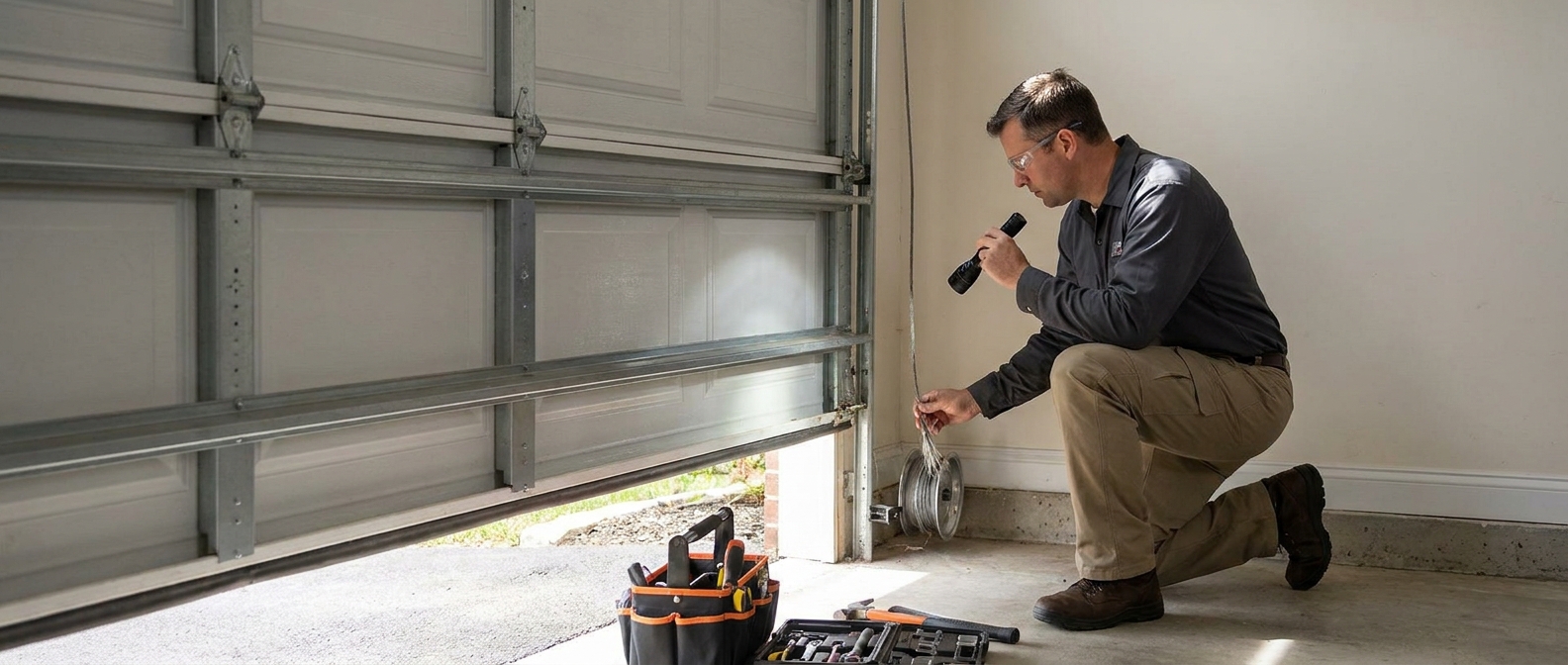
If your garage door cable came off the drum or pulley, stop using the door.
A loose or tangled cable is not a small cosmetic issue. It usually means the door has lost proper tension, hit an obstruction, started binding during travel, or has another worn part creating resistance in the system. Once the cable comes loose, the door can become crooked, jammed, or unsafe very quickly. If a roller has already left the track or the door is stuck crooked, see our guide on what to do when a garage door comes off track.
At Spring King Garage Doors, this is a repair call we take seriously because the cables are tied directly into the spring system. They carry a tremendous amount of tension down to the bottom of the door. If that tension is released the wrong way, cables, brackets, and other hardware can move with enough force to injure someone or damage property.
Here is what Connecticut homeowners should know before trying the opener again or searching for a DIY cable fix.
What It Means When a Garage Door Cable Comes Off
Garage door cables help transfer spring tension to the bottom of the door so the door can lift and lower evenly. On a torsion spring system, the cables wrap around drums near the top corners of the door. On an extension spring system, the cables run through pulleys along the sides of the door.
When one cable comes off the drum or pulley, the door is no longer moving evenly on both sides. That can cause the door to hang crooked, bind in the tracks, stop partway, or become stuck in a partially open position. If the biggest symptom is that the garage door is uneven or crooked, the cause may be cable routing, pulley wear, spring balance, or a slipped drum.
The cable itself may look like the obvious problem, but the real cause is often somewhere else in the system. A cable can jump off because the spring tension is wrong, the door hits something while moving, a pulley or bearing creates too much resistance, or the door loses smooth travel and creates slack in the cable.
That is why garage door cable repair is not just a matter of putting the cable back where it belongs. The root cause has to be found, or the same issue can happen again.
Common Causes of Loose, Tangled, or Off-Drum Cables
Every cable issue is a little different, but most calls trace back to a few common causes.
Improper Spring Tension
The springs carry most of the door's weight. If the springs are improperly tensioned, the door may not stay balanced as it travels. Related symptoms can include a garage door that opens a few inches, then stops, because the opener may be reacting to a door that has become too heavy or uneven to move safely. That can create slack in the cables, especially as the door moves through a rough or uneven part of its cycle.
Once slack appears, the cable can tangle, overlap on the drum, or slip out of place.
A related warning sign is a garage door that drops too fast or slams shut, which can point to lost spring tension, a cable issue, or a door that is no longer being controlled safely.
This is one reason cable issues are often related to broken spring repair, spring adjustment, or the same tension problems covered in our broken garage door spring guide. The cable may be what the homeowner sees, but the spring system may be what caused the problem.
Something Interfered With the Door During Travel
Many cable problems happen suddenly. A bike, trash can, storage bin, rake, shovel, or other item near the track can interfere with the door while it is moving. Even a brief obstruction can make the door stop unevenly or create a jolt in the system.
When that happens, one side of the door may lose tension for a moment. That is enough for the cable to come loose or wrap incorrectly.
This is why it is important to stop using the door after any impact or jam. Running the opener again can make a bad situation worse.
Worn Pulleys on Extension Spring Doors
On extension spring doors, worn pulleys can create cable problems. One warning sign is a door that has become very noisy; our noisy garage door troubleshooting guide explains other sounds that can point to worn rollers, pulleys, springs, or cables. If a pulley is no longer turning smoothly, the cable has to fight extra resistance every time the door moves.
Over time, that resistance can contribute to frayed cables, uneven travel, or a cable slipping out of place.
Bearings, Rollers, or Hardware Adding Resistance
The door needs to move freely through the tracks. If bearings, rollers, hinges, or other moving parts are worn or dry, the door may feel heavy, jerky, or bouncy. Lack of lubrication can also add resistance.
That extra resistance matters because the cable and spring system depend on smooth, predictable movement. A door that binds, bounces, or drags can create slack where there should be steady tension.
Previous Repairs or Adjustments That Were Not Balanced Correctly
Sometimes a cable issue shows up after previous work because the springs were not tensioned correctly or the door was not balanced properly. A cable rewind without correcting the door balance is not a complete repair.
The door should move evenly, sit level, and operate without one side racing ahead of the other.
Warning Signs Before a Cable Problem
Some cable failures happen without much warning, especially after the door contacts an object. Still, homeowners may notice clues before the cable fully comes off.
Watch for:
- A door that looks crooked or hangs lower on one side
- A cable that looks loose, tangled, frayed, or unevenly wrapped
- Jerky or bouncy movement during opening or closing
- A door that feels unusually heavy to lift by hand
- Loud operation on an extension spring door
- Scraping, binding, or uneven movement in the tracks
- A door that stops or jams after hitting an object
These are not signs to ignore. A garage door that is moving unevenly can damage the opener, tracks, rollers, panels, drums, pulleys, or spring system if it continues to run.
What Homeowners Should Not Do
If the cable is loose, tangled, off the drum, off the pulley, or hanging near the side of the door, do not try to fix it yourself.
Do not:
- Keep pressing the opener button to see if it clears itself
- Try to pull the cable back onto the drum or pulley
- Loosen brackets, drums, pulleys, or bottom fixtures
- Lift a crooked or jammed door by hand
- Cut or unwrap the cable
- Adjust the spring tension
- Try to force the door open or closed
The danger is not just the cable. The cable is connected to the spring system and bottom brackets, where a tremendous amount of stored energy may be present. One wrong move can release tension suddenly and send hardware moving fast.
This should always be handled as a professional garage door repair, not a DIY project.
Why a Simple Cable Rewind Is Not Always the Whole Repair
Sometimes the repair is straightforward. A technician may be able to get the door back into the correct position, rewind the cable, and retension the springs.
Other times, the cable came off because another part failed or created too much resistance. In that case, simply rewinding the cable would leave the real problem in place.
Parts that may need attention include:
- Cables that are frayed, stretched, kinked, or damaged
- Pulleys that are worn or resisting movement
- Bearings that are adding drag
- Drums that are damaged or not winding the cable correctly
- Springs that are incorrectly tensioned or worn out
- Rollers or tracks that are causing the door to bind
The on-site diagnosis determines the repair. If a bearing or pulley is adding a lot of resistance, for example, that part needs to be replaced so the door can move smoothly again.
What Spring King Inspects on a Cable Repair Call
When Spring King arrives for a cable issue, the first step is not guessing. It starts with a visual inspection and a conversation about what happened.
That context matters. Did the door hit something? Did it get noisy first? Did one side start hanging lower? Did the opener keep trying to move the door after it jammed? Those details help point toward the cause.
From there, the technician checks for obstructions the homeowner may have missed. If the door is jammed, the technician safely gets it back to its proper location before diagnosing the rest of the system.
The inspection can include:
- Spring tension and spring condition
- Cable condition and cable routing
- Drum condition
- Pulley condition on extension spring systems
- Bearing condition
- Roller and track movement
- Signs of impact or obstruction
- Whether the door is balanced after the repair
The goal is to restore safe, even travel, not just make the cable look normal again.
How Regular Maintenance Helps Prevent Cable Issues
The best way to reduce the chance of cable problems is regular maintenance. A yearly garage door tune-up and maintenance visit gives a technician a chance to catch failing parts early before they turn into a jammed door, tangled cable, or dangerous breakdown. For more detail on that prevention work, see our guide on whether a garage door tune-up is worth it.
Maintenance can identify:
- Pulleys that are wearing out
- Bearings that are creating resistance
- Springs that need attention
- Cables showing early wear
- Dry rollers, hinges, or tracks
- Hardware that has loosened from vibration
- Door balance issues
Catching those problems early can save a large amount of cost compared with waiting until the door is stuck, crooked, or unsafe to move. It can also prevent a more serious situation where a homeowner is tempted to force the door or attempt a risky repair.
For Connecticut homes, annual service is a practical rhythm. Cold winters, humid summers, and daily use all put wear on the moving parts of a garage door system.
When to Call Spring King
Call for service if your garage door cable came off the drum or pulley, if one side of the door is hanging lower than the other, or if the door is jammed after making contact with an object.
Do not keep operating the opener. Do not try to rewind the cable. Do not attempt to free the door by hand.
Spring King Garage Doors provides garage door cable repair and full garage door repair service for homeowners in Middletown, Middlesex County, Hartford County, New Haven County, and nearby Central Connecticut towns.
If your door is stuck, crooked, noisy, or showing a loose cable, contact Spring King so the system can be inspected and repaired safely.
Need garage door help in Connecticut?
Spring King serves Middletown and 30+ towns across Central CT. Fast response available.
Add Spring King as a Preferred Source on Google