Why Your Garage Door Opens a Few Inches, Then Stops
If your garage door starts to open, moves a few inches, and then stops, the opener is usually not the first thing to blame.
In many cases, the opener is reacting to a door that has become too heavy to lift. That often points to a broken spring, an improperly tensioned spring, or another mechanical issue that is making the door unsafe to operate. If the issue started with a sudden bang and the door will not open at all, read our related guide on what that loud bang means when your garage door won't open.
If the same door also drops too fast or slams shut, stop using it right away. That symptom can mean the counterbalance system is no longer controlling the door safely.
At Spring King Garage Doors, this is a common garage door repair call across Middletown and Central Connecticut. The key is knowing when a simple visual check is safe and when to stop using the door entirely.
What Is Happening When the Door Starts to Open, Then Gives Up
You press the wall button, remote, keypad, or app. The opener starts. The door lifts a few inches off the floor. Then it stops, reverses, or strains without going anywhere.
That symptom usually means the opener has run into too much resistance.
A garage door opener is designed to move a balanced door. It is not designed to lift the full dead weight of the door by itself. When the spring system is not doing its job, the opener may have just enough power to nudge the door upward before the weight overwhelms it.
That is why a door can move a few inches and then quit.
The Most Common Cause Is a Broken or Improperly Tensioned Spring
The springs do the heavy lifting in a garage door system. They counterbalance the door so it can be opened by hand or moved by the opener without excessive strain.
When a spring breaks or loses the right amount of tension, the door becomes much heavier than the opener expects. Sometimes the opener can pull it up a few inches. Then the motor reaches its limit and stops.
In most service calls with this symptom, the door is not stuck because of the opener. It is too heavy because the spring system is no longer supporting it correctly.
That distinction matters. If the spring is broken, the spring problem needs to be repaired first. Adjusting the opener or repeatedly pressing the button will not fix the door balance.
The Opener Can Be the Problem, But It Is Less Common
There are opener-related causes that can create a similar symptom.
One example is the opener force setting. That setting tells the opener how much resistance it should tolerate before stopping. If the setting was changed incorrectly, set too low, or the opener is no longer saving the setting properly, the motor may stop before the door has opened.
That can point to an opener issue, but it is less common than spring or door-balance problems. If the door does not respond from the remote or keypad at all, but still works from the wall button, use our separate guide to a garage door remote or keypad not working because that symptom points to a different diagnostic path.
This is why the order of diagnosis matters. A technician should confirm that the door is properly balanced and moving freely before assuming the opener has failed.
Safe Visual Checks Homeowners Can Make
There are a few things you can look at without touching high-tension parts. Treat these as visual checks only. Do not adjust springs, cables, pulleys, brackets, drums, or opener settings if you are not trained to do that work.
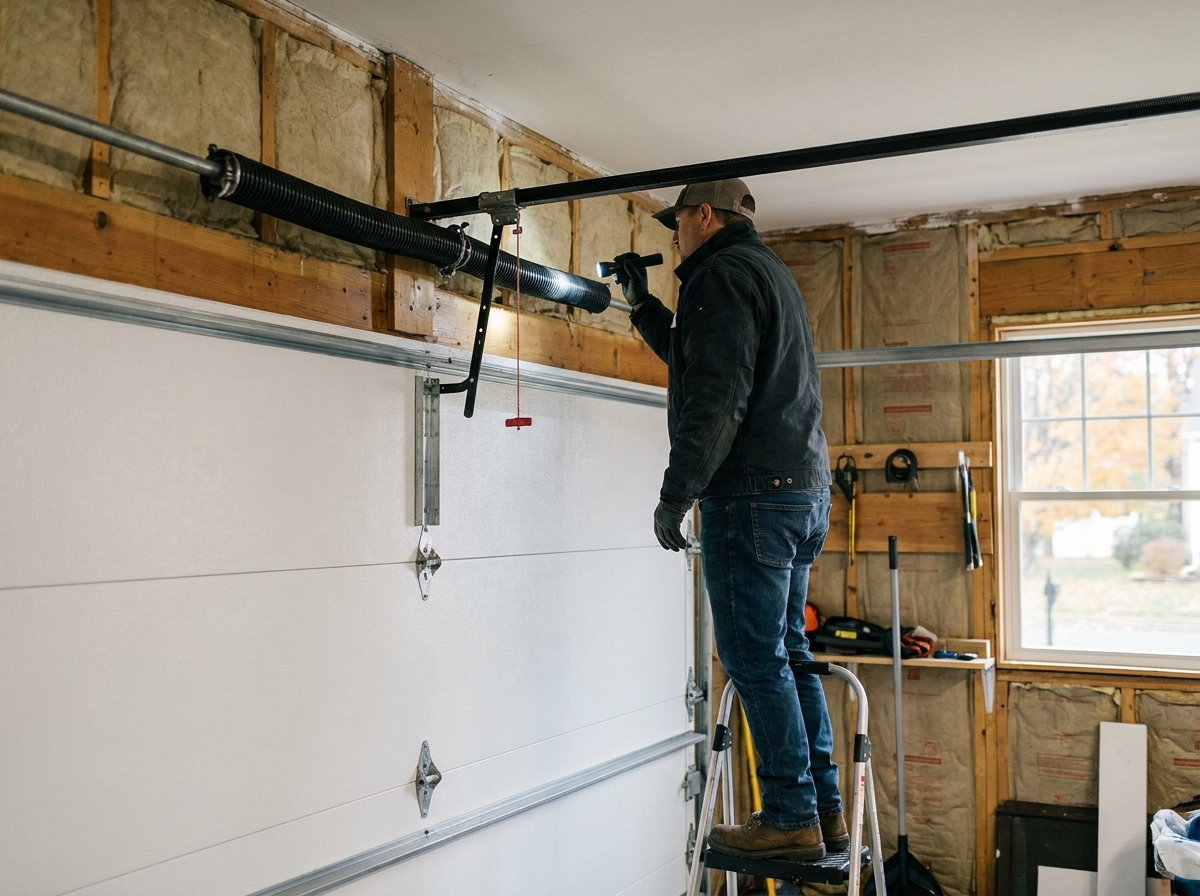
Look at Torsion Springs Above the Door
Torsion springs sit on a metal bar above the garage door opening, inside the garage.
Stand back and look at the spring. A torsion spring should be one continuous coil. If you see a clear gap where part of the spring has separated, the spring is likely broken.
That is one of the most recognizable broken garage door spring symptoms a homeowner can spot from a safe distance.
Look at Extension Springs Along the Tracks
Extension springs sit on each side of the door along the horizontal tracks.
Look to see whether each spring is still in one piece and properly connected to the pulley at one end and a secure mounting point at the other. If an extension spring is sagging, hanging loose, or accompanied by loose hanging cables, it likely broke or lost proper tension.
Do not pull on the spring or try to reconnect anything. If it looks wrong, stop using the door and call for service.
Look at the Cables on Each Side of the Door
Garage door cables run down the sides of the door to the bottom brackets.
If the cables have no tension, are hanging loose, or appear to be off track, that confirms a spring or tension problem. This is not always a perfect telltale sign because a second spring may still keep some cable tension even when one spring has failed. But if the cables are obviously loose, something is wrong. If the door is also sitting crooked or moving unevenly, read our guide to why a garage door becomes uneven or crooked before trying the opener again. If a roller has popped out or the door is visibly off its track, stop using it and review what to do when a garage door comes off track.
Again, this is a look-only check. Garage door cables are part of the counterbalance system and should not be adjusted by hand. If the cable is loose, tangled, or off the drum, see our related guide on what it means when a garage door cable comes off the drum or pulley before using the opener again.
A Spring Can Look Intact and Still Be the Issue
Not every spring problem is obvious from the garage floor.
A torsion spring may look like it is still in one piece but no longer have the correct tension. An extension spring may still be connected but stretched or worn past the point where it properly balances the door.
That is why a door that opens only a few inches should not be dismissed just because the spring is not visibly snapped.
Spring King checks spring tension as part of the diagnosis. If the door is not properly balanced, the opener is being asked to do work it was not built to do.
What Not to Do If the Door Feels Heavy
If you suspect a broken spring, loose cable, or unusually heavy door, stop using the opener and the door immediately.
Repeatedly trying the opener can burn out the motor. What starts as a spring or tension repair can become a spring repair plus an opener repair or replacement if the opener is forced to keep struggling against a heavy door.
Do not try to "help" the opener by lifting the bottom of the door while the opener pulls from the top. Without proper spring tension, the door can come down hard and fast. That can severely damage the door, damage the opener, or seriously injure someone nearby.
Do not attempt DIY spring, cable, or high-tension hardware repairs. These parts store a lot of force, and a mistake can be dangerous.
The safest move is simple: stop using the system and schedule a professional diagnosis.
What Spring King Checks on a Service Call
When Spring King arrives for a door that starts to open and then stops, the first step is to find out whether the door itself is balanced and moving freely.
That includes checking:
- Spring tension and spring condition
- Obstructions, including an engaged manual lock
- Rollers and hinges
- Whether the door is binding in the track
- Cable routing and cable condition
- The opener and opener force behavior
The opener is part of the inspection, but it comes after the door is checked. If the door is too heavy or binding, the opener may be doing exactly what it should by stopping instead of forcing the door. If your issue started after an outage or emergency-release pull instead, read our guide on what to check when a garage door opener is not working after a power outage.
Connecticut Weather Can Push Worn Springs Over the Edge
A spring can break at any time, but spring failures often increase around season changes.
Connecticut temperature swings put extra stress on garage door springs. Cold snaps, freezing nights, spring warmups, and the move into 90-degree summer days all make metal expand and contract. If a spring is already old or worn, those temperature changes can be enough to push it past the breaking point.
Older doors and high-use doors are especially vulnerable. If the door opens and closes several times a day, the spring system is moving through more cycles and reaching the end of its service life sooner.
This is one reason annual garage door tune-up and maintenance is worth taking seriously. A technician can check spring tension, look for worn parts, lubricate moving components, and catch problems before the opener is forced to struggle. For a deeper look at what that visit includes, read our guide on whether a garage door tune-up is worth it.
When It Becomes an Opener Repair or Replacement
Diagnosis decides the fix.
If the spring is broken, the spring must be repaired first. If the spring is intact but improperly tensioned, the balance issue still needs to be corrected before the opener is evaluated.
If the homeowner has been using the door while the springs were broken or poorly tensioned, the opener may already have been damaged. In that case, Spring King may need to repair or replace the opener after the door is properly balanced.
This is why catching the problem early matters. The sooner you stop using the system and call for help, the better chance you have of avoiding extra opener damage.
When to Call Spring King
If your garage door opens a few inches and then stops, do not keep testing it over and over. Check visually for an obvious broken spring, loose cable, engaged lock, or obstruction. If anything looks wrong, or if the door feels unusually heavy, stop using the opener.
Spring King can diagnose whether the issue is a broken spring, incorrect spring tension, binding rollers, damaged cables, an engaged lock, a track problem, or an opener issue.
For homeowners in Middletown and across Central Connecticut, this is exactly the type of symptom that deserves a careful repair visit. Schedule broken spring repair, garage door opener service, or general garage door repair with Spring King Garage Doors so the door can be fixed safely and correctly.
Need garage door help in Connecticut?
Spring King serves Middletown and 30+ towns across Central CT. Fast response available.
Add Spring King as a Preferred Source on Google