Is a Garage Door Tune-Up Actually Worth It? What Central CT Homeowners Should Know
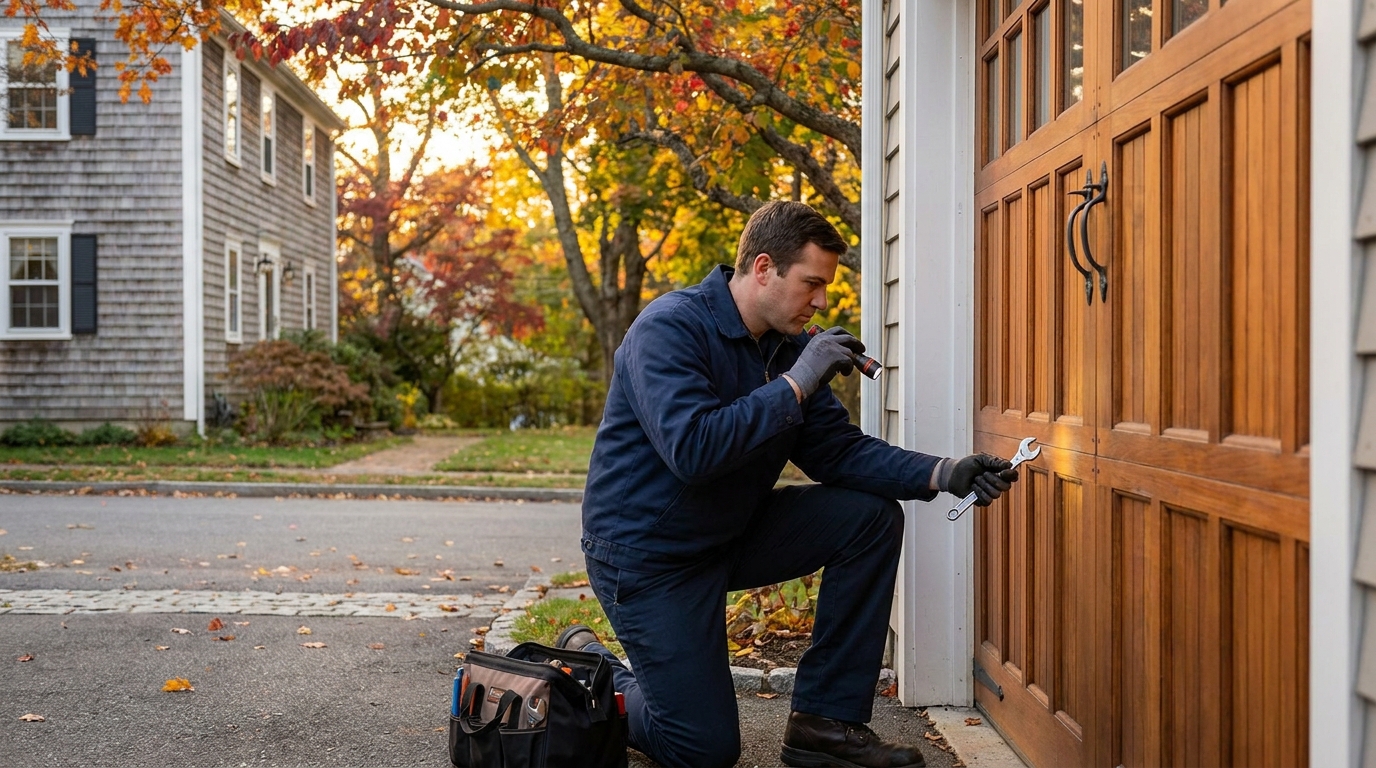
Your garage door is probably the largest moving piece of equipment in your home. It goes up and down over a thousand times a year, through Connecticut's humid summers and freezing winters, bearing hundreds of pounds of tension across springs, cables, rollers, and an opener motor that ties it all together.
And yet, most homeowners don't think about it until something goes wrong.
That's not a criticism, it's just the reality. Garage doors are easy to take for granted because they work reliably for long stretches of time. But like any mechanical system under constant stress, small issues develop quietly. A spring loses tension gradually. A roller starts to dry out. A cable frays one strand at a time. None of it is obvious until the system crosses a tipping point and something breaks, jams, or fails in a way that's inconvenient at best and expensive at worst.
An annual garage door tune-up is designed to catch those developing problems before they reach that point. It's one of the simplest, most cost-effective things you can do to protect your garage door system, and it's far less expensive than the repairs it helps you avoid.
Are Garage Door Tune-Ups Worth It?
Short answer: absolutely, yes.
A garage door tune-up is worth it for the same reason an oil change is worth it for your car. You're not fixing a problem, you're preventing one. And in the world of garage doors, the problems you prevent tend to be significantly more expensive than the tune-up itself.
Here's what we mean. A garage door system is made up of interdependent components: springs, cables, rollers, hinges, tracks, an opener motor, a drive mechanism, and safety sensors. When one part starts to wear or fall out of spec, it puts additional strain on everything connected to it. A spring that's lost tension forces the opener motor to work harder. An opener working harder wears out its gears faster. Worn gears lead to jerky operation, which stresses the door panels and track alignment.
One small issue becomes a chain reaction, and by the time the homeowner notices, they're not dealing with a minor adjustment anymore. They're looking at a garage door repair that could have been avoided.
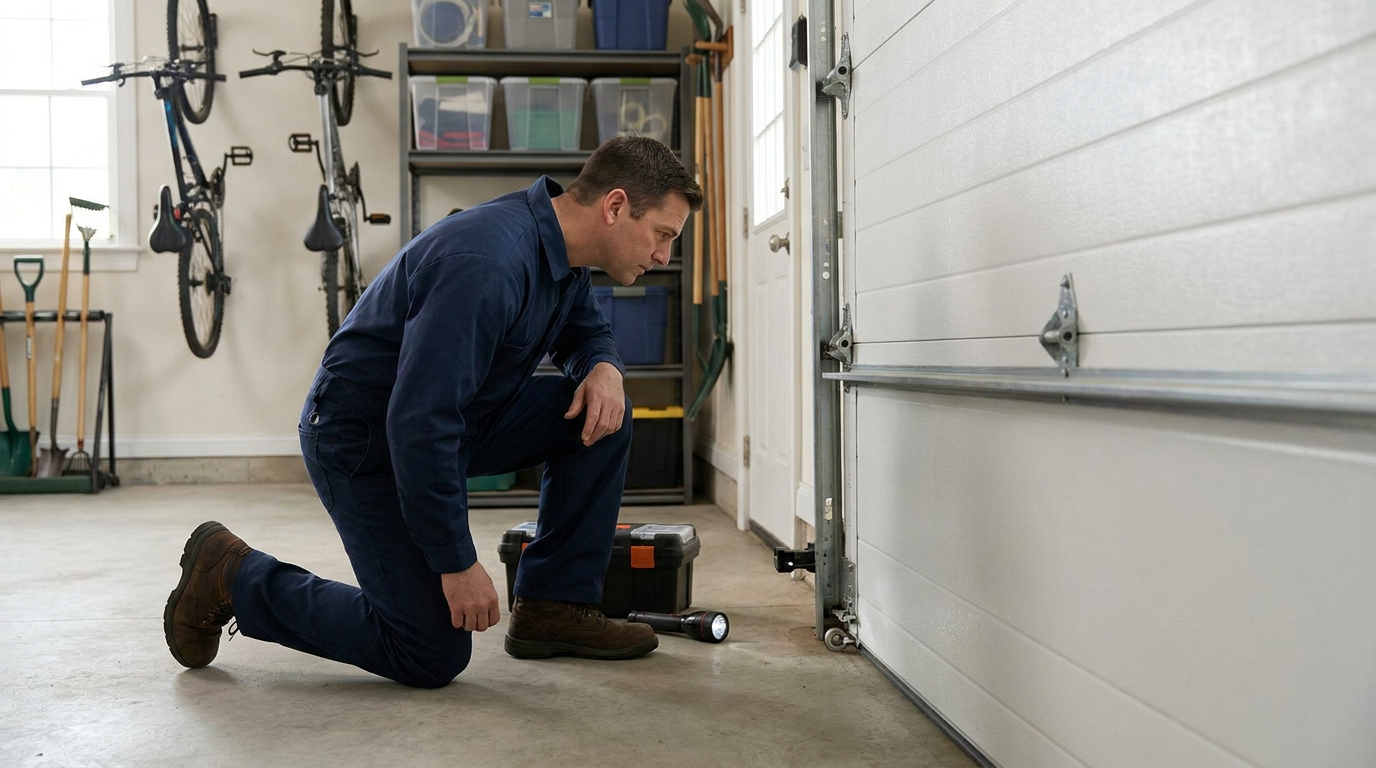
Annual garage door maintenance breaks that cycle. A trained technician inspects the entire system, identifies anything that's wearing or drifting out of adjustment, and addresses it before it has a chance to cascade into something bigger. Many major garage door repairs can be reduced or prevented by staying on top of annual tune-ups.
So if you've been wondering whether a tune-up is really necessary or just an upsell, it's one of the best investments you can make in your home's most-used entry point.
The Balance Check Most Homeowners Miss
Of all the things a professional catches during a tune-up, door balance is the one homeowners almost never get right on their own, and it's arguably the most important.
Door balance refers to how well the spring counterbalance system is doing its job. Your garage door is heavy, often 150 pounds or more for a standard two-car steel door. The springs are there to counterbalance that weight so the opener motor doesn't have to do the heavy lifting on its own. When the springs are properly tensioned, the door should feel nearly weightless if you lift it by hand. The opener's job is just to guide it up and down, not to muscle it.
When a door falls out of balance, because springs have weakened over time, or were never set correctly in the first place, the opener is forced to compensate. It works harder on every single cycle. That accelerated strain wears out the motor, the drive gears, the trolley, and potentially the door hardware itself.
The tricky part is that an out-of-balance door doesn't always announce itself dramatically. It happens gradually. The door gets a little heavier each month. The opener slows down slightly. You might not even notice until something breaks.
That's why a professional balance test is a core part of every tune-up. We test whether the spring counterbalance system is providing proper tension so the door isn't too heavy or too light for the opener to manage safely and efficiently.
What an Out-of-Balance Door Actually Looks Like
Here's a real example from a recent project that illustrates exactly why this matters.
We arrived at a home where the homeowner had called about general maintenance. But we could tell something was off the moment the garage door started to open. The opener lifted the door extremely slowly, visibly straining through the travel. The motor was working far harder than it was designed to.
The opener itself was relatively new, but it was already acting like a much older unit. The reason was clear once we tested the door's balance.
With the opener disconnected, we checked how much force the door required to hold in place. It weighed in at roughly 35 pounds with the current spring tension. That's far too heavy. A properly balanced door should feel close to weightless, somewhere around five pounds or less when you lift it by hand. At 35 pounds, the opener motor was shouldering that extra load on every single open and close cycle.
After adjusting the spring tension to bring the door back into proper balance, the difference was immediate. The door moved smoothly, the opener ran noticeably faster, and the strain on the motor was dramatically reduced.
If that situation had gone unaddressed, the likely outcome was a burned-out opener motor, a broken spring, or cascading damage to other door components, any of which would have cost far more than years' worth of annual tune-ups combined. It's also the kind of scenario that can lead to problems like your garage door opening a few inches and stopping, which is a frustrating symptom of deeper system strain.
Important note: Adjusting spring tension is genuinely dangerous and should only be done by a trained professional. Torsion springs are under extreme force, and improper handling can cause serious injury. This is not a DIY task under any circumstances.
What's Included in a Spring King Garage Door Tune-Up?
Our garage door tune-up and maintenance service is thorough and covers every component in the system. Here's what's included:
- 25-point safety inspection: A comprehensive review of the entire garage door system, from top to bottom, checking for wear, damage, misalignment, and safety concerns.
- Hardware check and tightening: Every bracket, bolt, and fastener gets inspected and tightened. Vibration from daily use loosens hardware over time, and loose components create noise, misalignment, and accelerated wear.
- Roller check and lubrication: Rollers are inspected for wear, cracking, or wobble, then lubricated to ensure smooth, quiet travel along the tracks.
- Spring check and lubrication: Springs are inspected for signs of fatigue, rust, or weakening, and lubricated to reduce friction and corrosion.
- Balance check and adjustment: The door's balance is tested to confirm the spring counterbalance system is providing proper tension. If the door is too heavy or too light, the springs are adjusted to bring it back into spec.
- Cable check: Cables are inspected for fraying, slack, or signs of wear that could lead to a cable coming off the drum or other cable-related failures.
- Opener check and adjustment: The garage door opener is inspected and adjusted, including chain or belt tightening when appropriate, travel checks, and safety sensor review.
The goal is to leave your garage door system running as smoothly and safely as possible, with nothing left unaddressed that could develop into a problem down the road.
What Homeowners Can Safely Do Themselves
There are a few things you can and should do between professional tune-ups to help keep your garage door in good shape. None of these require special tools or advanced knowledge.
Lubricate the Moving Parts
Apply a garage-door-specific lubricant (white lithium grease or silicone spray, not WD-40) to the springs, rollers, hinges, and bearing plates at least once per year. Twice per year is even better, especially in Central Connecticut where seasonal temperature swings are significant. Lubrication reduces friction, prevents rust, and helps the entire system run quieter.
Do a Visual Inspection
Take a few minutes to look over the system. Check the springs for rust, and look for lower-panel corrosion that may need rusty garage door repair-or-replace guidance. Look at the cables for fraying. Inspect the rollers for cracks or wobble. Check the hinges for looseness. Look at the weather seal along the bottom for gaps or damage. If anything looks worn, cracked, frayed, or out of place, it's a sign the door could use professional attention.
Test How Heavy the Door Feels
This is a simple but valuable check you can do to gauge your door's balance between tune-ups:
- Make sure the door is fully closed. This is critical. the door must be all the way down before you proceed.
- Pull the red emergency release cord to disconnect the door from the opener.
- Try to lift the door manually. Lift slowly and pay attention to how much effort it takes.
- If the door feels heavier than about 5 pounds, the springs likely need adjustment and you should call a professional.
- If anything feels unsafe or the door feels very heavy, stop immediately. Do not force it. If you cannot control the door comfortably, leave it alone and call for service.
This test gives you a rough sense of whether the door is in balance. It's not a substitute for a professional balance test, but it can alert you to a problem before it causes damage.
What You Should Not Do
Some garage door work is simply too dangerous or too easy to get wrong for DIY attempts:
- Do not adjust springs. Torsion and extension springs are under extreme tension and can cause serious injury if mishandled.
- Do not adjust or replace hinges. Certain hinges are load-bearing and connected to the cable system.
- Do not change rollers yourself. Some roller positions are under spring tension and require the door to be properly secured.
- Do not adjust opener chain or belt tension. Too much tension can damage the opener's drive mechanism and gears.
- Do not work on cables or any high-tension hardware. Cable work involves spring tension and requires professional tools and training.
When in doubt, call a professional. The risk of injury or causing additional damage isn't worth the savings on any of these tasks.
Warning Signs Your Garage Door Is Overdue for a Tune-Up
If you notice any of the following, your door is telling you it needs attention:
- Loud operation: This is one of the most common telltale signs that a garage door has been neglected. Grinding, squealing, rattling, or banging during operation usually means something is dry, loose, worn, or misaligned.
- Slow opener response: If the opener seems sluggish or takes longer than usual to open or close the door, it may be straining against an out-of-balance door.
- Jerky or uneven movement: The door should travel smoothly along the tracks. Jerky, stuttering, or uneven movement suggests roller, track, or balance problems.
- Heavy-feeling door: If the door feels noticeably heavy when you lift it manually, the springs are likely losing tension.
- Door doesn't stay in place: A balanced door should stay put when you stop it halfway open. If it drifts up or slides down, the balance is off.
- Frayed cables: Any visible fraying on the cables means they're weakening and could fail.
- Rusty springs: Rust accelerates spring fatigue and increases the risk of a sudden break.
- Loose hinges or wobbling rollers: Both indicate wear that will worsen with every cycle.
- Weather-seal gaps: Gaps along the bottom seal let in drafts, moisture, pests, and debris.
- Anything that looks worn or out of place: Trust your instincts. If something doesn't look right, it's worth having a professional take a look.
A note on urgency: Most of these signs indicate it's time to schedule a tune-up. But jerky movement or a very heavy-feeling door are more urgent. These suggest the system is under significant strain, and continued use could lead to a larger failure. If your door feels very heavy or moves erratically, have it looked at by a professional before using it regularly.
When to Schedule Tune-Up Service in Connecticut
For most Central Connecticut homes, whether you're in Hartford, Middletown, Meriden, New Haven, or anywhere in between, at least one professional tune-up per year is the baseline recommendation. For homes with heavier usage, older systems, or doors exposed to harsher conditions, twice per year is a smart move.
The best times to schedule are after a major season change:
- Late fall or early winter: Prepare the system for Connecticut's cold months, when metal contracts, lubricants thicken, and weather seals take a beating.
- Late spring or early summer: Address any wear from winter and get the system running smoothly for the high-use months ahead.
There's also one situation where a tune-up should be a priority regardless of the calendar: if you've recently purchased a home. New homeowners should always schedule a tune-up to make sure the doors are operating safely and smoothly. Previous owners may have deferred maintenance, made improper adjustments, or left behind issues that aren't visible without a trained eye. A tune-up gives you a clean baseline and catches hidden problems before they become an expensive surprise.
What Happens If We Find a Problem
A tune-up sometimes reveals that everything is in great shape and just needs minor lubrication and tightening. Other times, it uncovers something that needs attention, a weakening spring, a fraying cable, a roller that's starting to crack, or an opener that's showing signs of wear.
When that happens, we walk you through everything we've found. We explain how each issue works within the overall system, why it matters, and what could happen if it's not addressed. We're straightforward about what needs repair now versus what might be on its way out but still has some life left.
Not everything uncovered during a tune-up requires immediate action. Some findings are informational, things to monitor, plan for, or budget around. We're transparent about the difference, because earning your trust matters more than selling a repair you don't need yet.
The goal is always to give you a complete, honest picture of your garage door system's health so you can make informed decisions about your home.
Keep Your Garage Door Running Right
Your garage door works hard every day, and a little preventive attention goes a long way. An annual tune-up is one of the easiest ways to extend the life of your system, avoid unexpected breakdowns, and keep your door running safely and smoothly through every Connecticut season.
Spring King Garage Doors serves homeowners throughout Hartford, Middlesex, and New Haven counties with thorough, honest garage door care. If it's been a year or more since your last tune-up, or if you've never had one, now is a great time to get on the schedule.
Need garage door help in Connecticut?
Spring King serves Middletown and 30+ towns across Central CT. Fast response available.
Add Spring King as a Preferred Source on Google