What to Do When Your Garage Door Comes Off Track
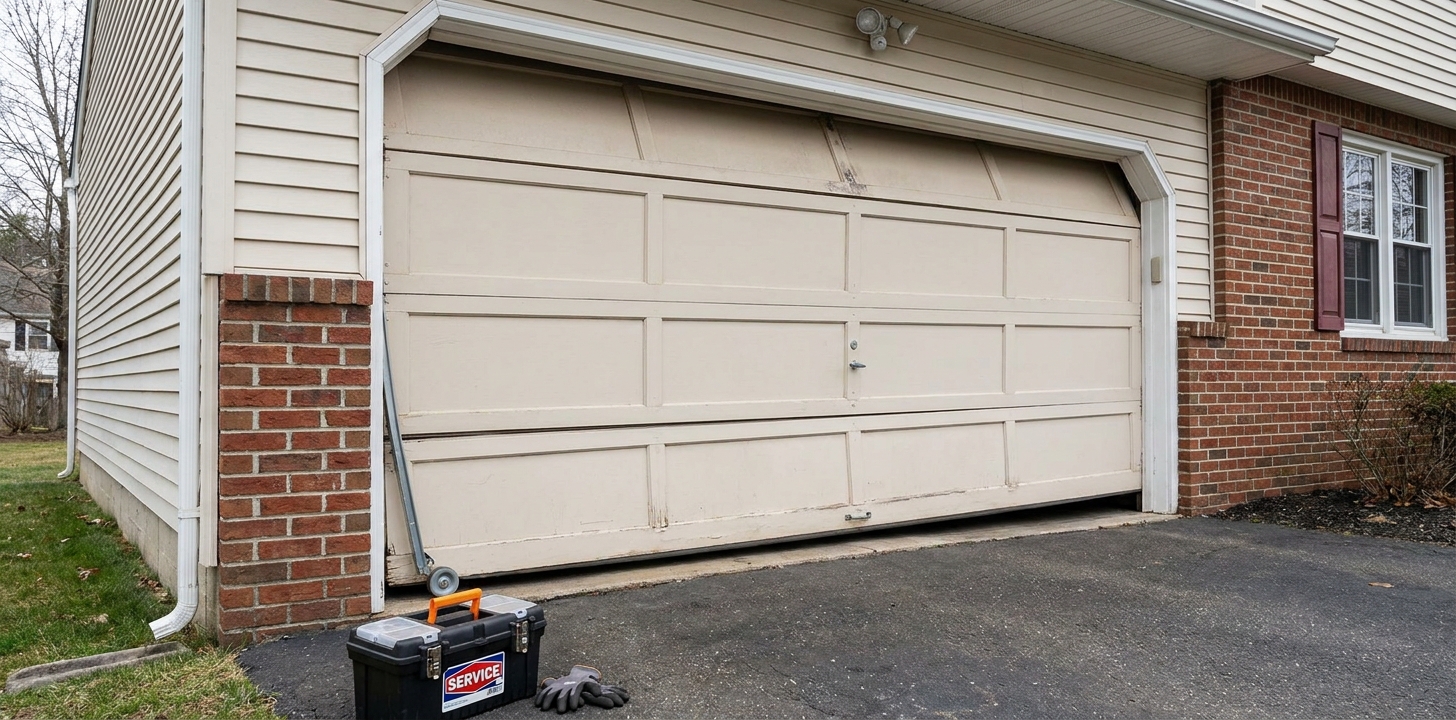
You step into the garage and something looks wrong. The door is sitting crooked in the opening. Maybe one side is higher than the other, or you can see a roller that's popped out of the track. You press the button on the opener and the door groans, shifts slightly, and stops. Or worse, it makes a loud scraping sound and refuses to budge at all.
If your garage door is off track, here's the most important thing we can tell you: stop using it immediately and call a professional.
Don't press the opener button again. Don't try to manually lift or lower the door. Don't attempt to push a roller back into place. A garage door off track is one of the more dangerous situations you can encounter with your garage door system, and forcing it—even once—can turn a fixable problem into a much more expensive one.
At Spring King, off-track calls are repair calls we take seriously for homeowners across Central Connecticut. Below, we'll walk you through why an off-track door is so dangerous, what typically causes it, the warning signs you might notice before it happens, and what professional diagnosis and repair looks like.
Why an Off-Track Garage Door Is Dangerous
A residential garage door is one of the heaviest moving objects in your home. Depending on the size and material, it can be extremely heavy. When the door is properly seated in its tracks, that weight is controlled—guided smoothly up and down by rollers, supported by springs and cables that counterbalance the load.
When a door comes off track, that control is compromised.
The biggest risk is that the door can fall. If the top panel has come out of the tracks, that panel can drop violently under its own weight. This isn't a slow slide—it can happen fast and with serious force. Anyone standing beneath the door, or any vehicle parked underneath, is at risk.
Beyond the immediate falling hazard, an off-track door also puts enormous stress on the cables, springs, and remaining hardware. The system is designed to work in balance. When one side is out of alignment or a roller has left the track, the forces become uneven and unpredictable. Cables can fray or snap. Panels can bend or crack. What started as a single roller out of position can cascade into damage across the entire door system.
This is exactly why we tell every homeowner the same thing: if the door looks off, sounds off, or is stuck in any way, stop using it.
Common Reasons a Garage Door Comes Off Track
In our experience, most off-track situations don't come out of nowhere. They're often the result of a smaller issue that went unnoticed or unaddressed until it compounded into a bigger problem. Here are the most common causes we see:
Improper Cable Routing or Cables That Jumped the Drum
The cables on your garage door work in tandem with the springs to lift and lower the door in a controlled way. Each cable wraps around a drum at the top of the door. If a cable isn't properly seated in the grooves of that drum—whether from wear, a previous improper repair, or a sudden jolt—it can jump out of position. When this happens, one side of the door loses tension while the other side keeps pulling. The result is a door that tilts, binds, and eventually comes off track.
If you're dealing with a cable issue, our guide on what happens when a garage door cable comes off the drum goes into more detail on this specific problem.
Vehicle Impact
It happens more often than you'd think. A driver misjudges the clearance, bumps a track with a side mirror, or backs into the bottom panel while the door is partially open. Even a seemingly minor impact can bend a track or knock a roller out of alignment. A bent garage door track doesn't guide the rollers properly, and the door can derail the next time it's operated.
Track Misalignment
Over time, the vibration of daily use can loosen the hardware that secures the tracks to the wall and the header. If the tracks shift even slightly out of their intended alignment—especially the vertical-to-horizontal curve at the top—rollers can catch, skip, or pop out entirely. This is one of those problems that develops gradually, often with warning signs that are easy to overlook.
Bent Tracks
Tracks can bend from impact, but they can also warp from the stress of a door that's been running out of balance. A bent track creates a pinch point or a gap where rollers can escape. Once a roller leaves the track at a bend, the door is off track and stuck.
Worn Rollers or Hinges
Rollers and hinges have a service life. As rollers wear down, they can become loose in the hinge brackets, wobble, and eventually slip out of the track. Worn or damaged hinges may not hold the rollers securely in position. Grinding or ticking can provide an earlier warning; our guide to worn garage door rollers and replacement explains what those sounds can mean. These are the kinds of small hardware issues that a homeowner might not notice day to day, but they set the stage for an off-track situation.
Warning Signs Before Your Garage Door Comes Off Track
Many off-track problems give you advance notice. Knowing what to look for can help you catch an issue before it becomes an emergency. Here's what to watch for:
- The door opens crooked or unevenly. If one side rises faster than the other or the door looks tilted in the opening, something is wrong with the balance or alignment. We cover this symptom in more detail in our post about a garage door opening unevenly or crooked.
- Cable tension looks uneven. If you can visually observe that the cable on one side is taut while the other is slack or hanging loose, the system is out of balance.
- You see tangled cables. Cables should run cleanly from the bottom bracket up to the drum. If they look twisted, bunched, or tangled, something has shifted.
- Cables aren't sitting in the drum grooves. If you look at the drums near the top of the door and see that the cable has slipped out of its grooves or is wrapping unevenly, that's a significant warning sign.
- Rollers look like they're about to fall out. Take a visual look at the rollers sitting in the track. If any roller appears to be riding at the edge of the track, tilted at an angle, or partially out of the track channel, the door is at risk.
- You hear rubbing, scraping, or grinding noises. A properly functioning garage door is relatively quiet. Scraping metal sounds usually mean something is contacting something it shouldn't—a roller dragging against the edge of the track, a panel rubbing the frame, or hardware that's come loose.
- You see visible damage to the track. Dents, bends, gaps at the joints, or sections that look bowed outward are all signs the track can no longer guide the door safely.
If you notice any of these signs, it's time to have the door looked at before the door becomes fully off track and stuck. A professional tune-up and maintenance visit is designed to catch exactly these kinds of developing problems. Our guide to whether a garage door tune-up is worth it explains how balance checks, hardware tightening, and lubrication can prevent larger repair issues.
Can You Fix a Garage Door Off Track Yourself?
We understand the instinct. You see the problem, you want to fix it, and there are videos online that make it look straightforward. But we strongly advise against attempting to fix an off-track garage door yourself.
Here's why:
- The door is under spring tension. Even when a door is off track and appears to be stuck, the spring system is still loaded with significant force. Attempting to manipulate the door, the cables, or the track while the system is under tension can result in serious injury.
- The door can fall without warning. If the top panel or upper rollers have left the track, the door may be held in place by friction alone. Pushing, pulling, or jostling the door can release it.
- You can make the damage worse. Forcing a door that's off track is one of the fastest ways to damage panels beyond repair. A panel that gets bent or cracked from being forced while off track often can't be fixed—it requires panel replacement, and in some cases, a full door replacement. What might have been a straightforward track or roller repair can become a much larger job.
As a homeowner, the best thing you can do is observe and describe. Note which side looks off, whether you see a roller out of the track, if the door is stuck open or partially closed, and whether you heard any unusual sounds before it happened. That information is genuinely helpful when a technician arrives. But the physical repair—adjusting tracks, re-seating rollers, working with cables and springs—needs to be handled by someone with the tools, training, and experience to do it safely.
What Spring King Checks During an Off-Track Diagnosis
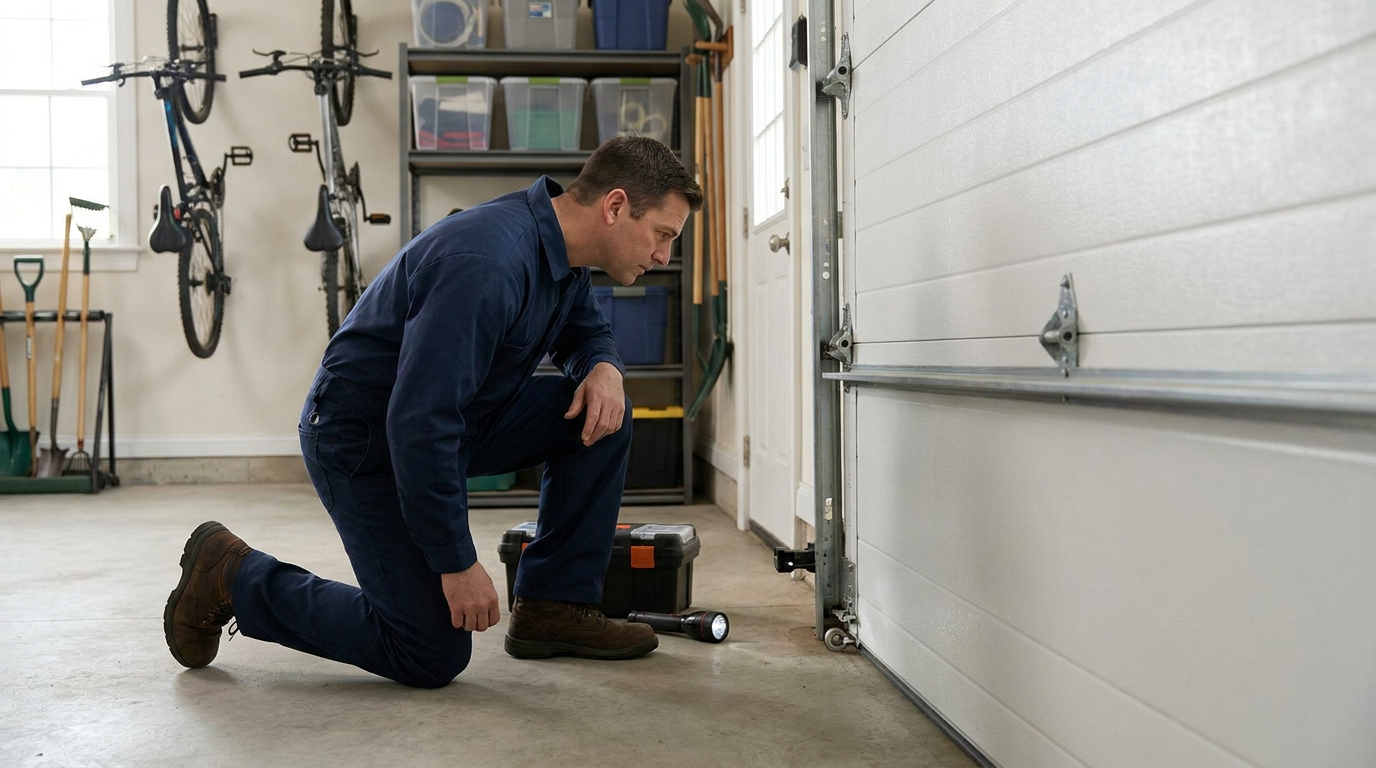
When we arrive for an off-track garage door repair call, our first priority is safety—both yours and ours. We assess the situation to understand exactly why the door came off track before we start putting it back.
The process generally follows this sequence:
Determining the Cause
We start by examining the full system: the tracks, the cables, the drums, the springs, the rollers, and the hinges. We're looking for the root cause, not just the symptom. A roller out of the track is the symptom. The cause might be a cable that jumped the drum, a bent section of track, a worn hinge that released the roller, or misaligned hardware.
Getting the Door Back in Track
Once we understand the cause, we carefully work the door back into the track. This requires managing the spring tension, properly positioning the rollers, and making sure the track is aligned correctly to receive them. We restore proper alignment on both sides so the door can operate in balance.
Safe Closure and Further Diagnosis
Once the door is back in track and we can close it safely, we perform a more thorough diagnosis. With the door in a controlled position, we can fully inspect the cables, springs, track, and hardware to determine whether additional repair or replacement is needed. Sometimes the fix is straightforward—a roller needed to be replaced, or a track bracket needed to be re-secured. Other times, the root cause requires more involved work.
Repair vs. Replacement: What Might Be Needed
The scope of repair after an off-track situation depends entirely on what caused it and how much secondary damage occurred. Here are some of the possibilities:
- Cable replacement or drum replacement. If the cables jumped the drum or were improperly routed, new cables or drums may be needed to restore proper operation. Learn more about our cable repair service.
- Track replacement. If a section of track is bent, dented, or warped beyond what can be safely corrected, that section may need to be replaced.
- Roller replacement. Worn or damaged rollers that contributed to the derailment are replaced to prevent the issue from recurring.
- Hinge replacement. If a hinge failed and allowed a roller to escape the track, new hinges restore the secure connection between the roller and the door panel.
- Panel replacement or full door replacement. If the door was forced while off track—or if the off-track event itself caused significant panel damage—panel replacement may be necessary. In cases where the panel is no longer available or the damage is extensive across multiple panels, a full door replacement may be the most practical option.
Every situation is different. Our goal is always to identify the most practical and honest repair path for your specific door.
How Regular Maintenance Helps Prevent Off-Track Problems
We mentioned earlier that many off-track situations are the result of smaller problems compounding over time. This is one of the strongest arguments for regular professional maintenance.
We recommend having your garage door serviced at least once a year by a professional. During a tune-up and maintenance visit, we go through the entire system:
- Lubrication. Properly lubricated rollers, hinges, and springs reduce friction and wear, which helps the door run smoothly and extends the life of the hardware.
- Balance check. We check that the door is balanced correctly—rising and lowering evenly on both sides. An unbalanced door puts extra stress on tracks, cables, and drums.
- Hardware inspection. We make sure all hardware is tight and properly fastened. Loose track brackets, worn rollers, and aging hinges are the kinds of small issues that can snowball into a larger service call if they're not caught early.
- Cable and drum inspection. We check that cables are properly seated in the drum grooves and in good condition. Early signs of fraying, misrouting, or wear are addressed before they lead to a cable failure or off-track event.
- Track inspection. We look for dents, bends, misalignment, and loose mounting hardware in the track system.
An annual service visit can help prevent the cost and safety risk of dealing with a door that has come fully off track.
When to Call for Help in Central Connecticut
If your garage door is off track, stuck crooked, or showing any of the warning signs we've described, don't wait for it to get worse. The longer an off-track door sits—or the more times it's operated in a compromised state—the greater the chance of additional damage and a more costly repair.
Spring King provides residential garage door repair throughout Central Connecticut, including Middletown, and communities across Middlesex County, Hartford County, and New Haven County. Off-track situations are one of our core repair services, and we approach every call with the same process: diagnose the cause, restore the door safely, and address the root issue so it doesn't happen again.
If your door isn't operating the way it should, reach out to us to schedule a repair. We're here to help you get your garage door back to safe, reliable operation.
Need garage door help in Connecticut?
Spring King serves Middletown and 30+ towns across Central CT. Fast response available.
Add Spring King as a Preferred Source on Google