Why Your Garage Door Slams Shut or Drops Too Fast
If your garage door slams shut, drops too fast, suddenly feels heavy, or starts moving in a jerky way, stop using it. Leave the door shut if it is already closed, keep people and vehicles away from it, and call for service.
That advice may sound direct, but this is one of those garage door problems where waiting can turn a dangerous situation into a more expensive repair. In many cases, the door has lost some or all of its counterbalance. The springs, cables, drums, and related hardware are what help control the weight of the door. When something in that system fails, the opener may be forced to lift weight it was never designed to carry, and the door can come down hard enough to damage panels, hardware, or anything in its path.
For homeowners in Central Connecticut, including Hartford, Middlesex, and New Haven counties, here is how to think through the warning signs, what you can safely check from a distance, and when to call a professional.
Why a Garage Door Drops Too Fast
A residential garage door is heavy. The reason it usually feels manageable is the spring system. The springs counterbalance the weight so the door can move smoothly by hand or with an automatic opener.
When the door starts dropping too fast, slamming shut, or feeling unusually heavy, the counterbalance system may no longer be doing its job. The most common causes are broken springs, worn springs, snapped cables, or cable hardware problems.
The opener can make the problem harder to notice at first. A motorized opener may keep trying to move the door even after the door has become too heavy. That is why some homeowners first notice that the door opens slower than usual, strains, jerks, or only moves partway.
If your opener is struggling because the door is out of balance, repeated button presses can make things worse. We have seen openers burn out after homeowners kept trying to run a door with broken or worn springs. We have also seen bottom panels damaged after a door came crashing down.
Warning Signs to Take Seriously
Some signs are obvious. Others are subtle at first. Either way, treat the door as unsafe until it has been inspected.
The Door Slams Shut
A door that drops hard at the end of travel or slams shut from a raised position is a major warning sign. The door may no longer be controlled by the spring and cable system. Do not stand under it, do not try to catch it, and do not keep testing it.
The Door Feels Heavy
If you are used to lifting the door manually and it suddenly feels much heavier, something has changed. A heavy-feeling door often points to worn springs, a broken spring, or another balance issue.
If the door is connected to an opener, the motor may reveal the same problem in a different way. It may sound strained, move slowly, stop before fully opening, or behave like the door is too much for it to lift.
The Door Moves in a Jerky Way
Jerky operation can happen when the door is no longer balanced evenly or when a cable, roller, track, or spring issue is affecting one side more than the other. A door that shakes, catches, or moves unevenly should be checked before it gets worse.
One Side Looks Lower Than the Other
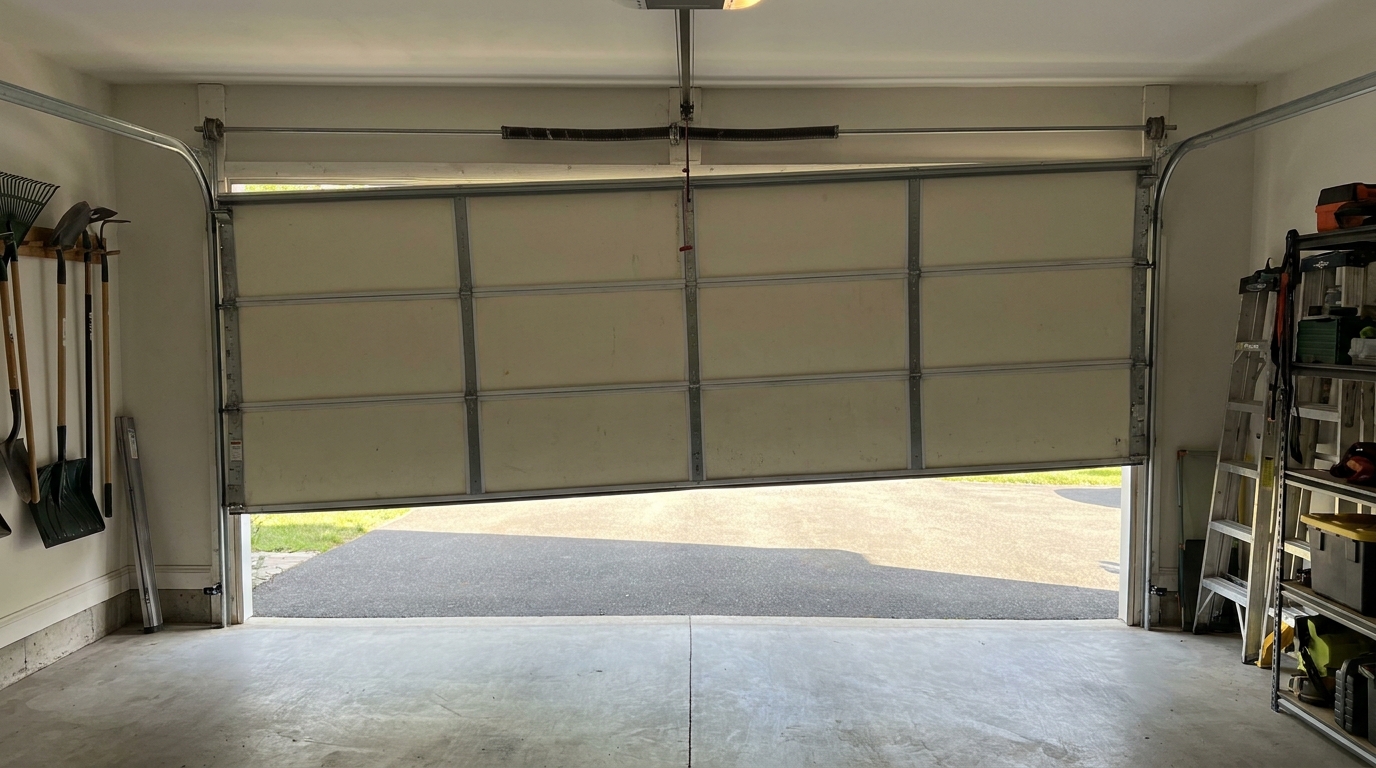
If one side of the door appears lower, crooked, or uneven, a cable may have slipped, snapped, or come off a drum. This can put the door in a bind and create a dangerous amount of tension in the wrong places.
Common Causes Behind a Fast-Dropping Door
The exact repair depends on what failed and whether the door was damaged afterward. These are the usual suspects.
Broken or Worn Springs
Springs do the heavy lifting. When a spring breaks, the door may suddenly feel too heavy, refuse to open, or drop too fast because the counterbalance has failed.
Sometimes the spring is not fully broken yet but has worn down enough that it no longer balances the door properly. That can show up as slow opener movement, jerky travel, or a door that feels heavier than it used to.
For more detail on spring symptoms, read our guide to broken garage door springs. If the spring is the issue, the repair is professional broken spring repair, not a DIY adjustment.
Snapped or Loose Cables
Garage door cables work with the springs and drums to lift and lower the door evenly. If a cable snaps, frays badly, or comes off the drum, the door may drop unevenly or become stuck at an angle.
A cable problem can look dramatic, but homeowners should still keep their distance. Do not try to rewind a cable, pull it back onto a drum, or loosen hardware to "free" the door. For more context, see our post on what happens when a garage door cable comes off the drum or pulley.
If a cable is damaged, the right path is professional garage door cable repair.
Opener Strain
The opener is there to move a properly balanced door. It is not meant to make up for failed springs or cables.
When the door becomes too heavy, the opener may slow down, hum, stop partway, reverse, or burn out from repeated attempts. This is why a door that only opens a few inches can be related to a spring or balance problem, not only an opener problem. Our guide on a garage door that opens a few inches then stops covers that symptom in more detail.
If the opener has been strained or damaged, Spring King can inspect the door balance first and then handle garage door opener service if the motor, gear assembly, or other opener parts need attention.
Bottom Panel Damage
If the door has already crashed to the ground, the bottom panel may be bent, cracked, or pulled out of shape. Sometimes the main repair is still springs or cables, but the impact damage changes the scope of the job.
A damaged bottom section should be inspected before the door is used again. If the panel is compromised, panel replacement may be part of the repair plan.
What Homeowners Can Safely Check
You do not need to diagnose the whole system before calling. A few safe observations can help you explain what happened.
From a distance, you can look for:
- A visible gap in the spring above the door
- A cable that is hanging loose, frayed, or snapped
- A door that is crooked in the opening
- A bottom panel that looks bent or damaged
- Jerky, slow, or uneven movement if you already saw it happen
If the door is closed, leave it closed. If it is partly open or crooked, stay clear of the opening and call for help.
Do not pull on cables, touch springs, remove covers, or loosen hardware. A quick visual check is enough.
What You Should Never Touch
Garage door springs and cable hardware are under extreme tension. That tension can release suddenly if the wrong bolt is loosened or the wrong part is moved.
Do not attempt to repair, adjust, or loosen bolts on:
- Springs
- Cables
- Bottom brackets
- Pulleys
- Drums
- Center bearing plates
Bottom brackets deserve special caution because the lift cables attach near the bottom of the door. Loosening bracket hardware while the system is under tension can be extremely dangerous.
This is also why a professional diagnosis matters when there are no obvious visible signs. A trained technician can disconnect and handle the door correctly, manually run it by hand, feel how it balances, and inspect parts the homeowner may have missed.
How a Professional Diagnoses the Problem
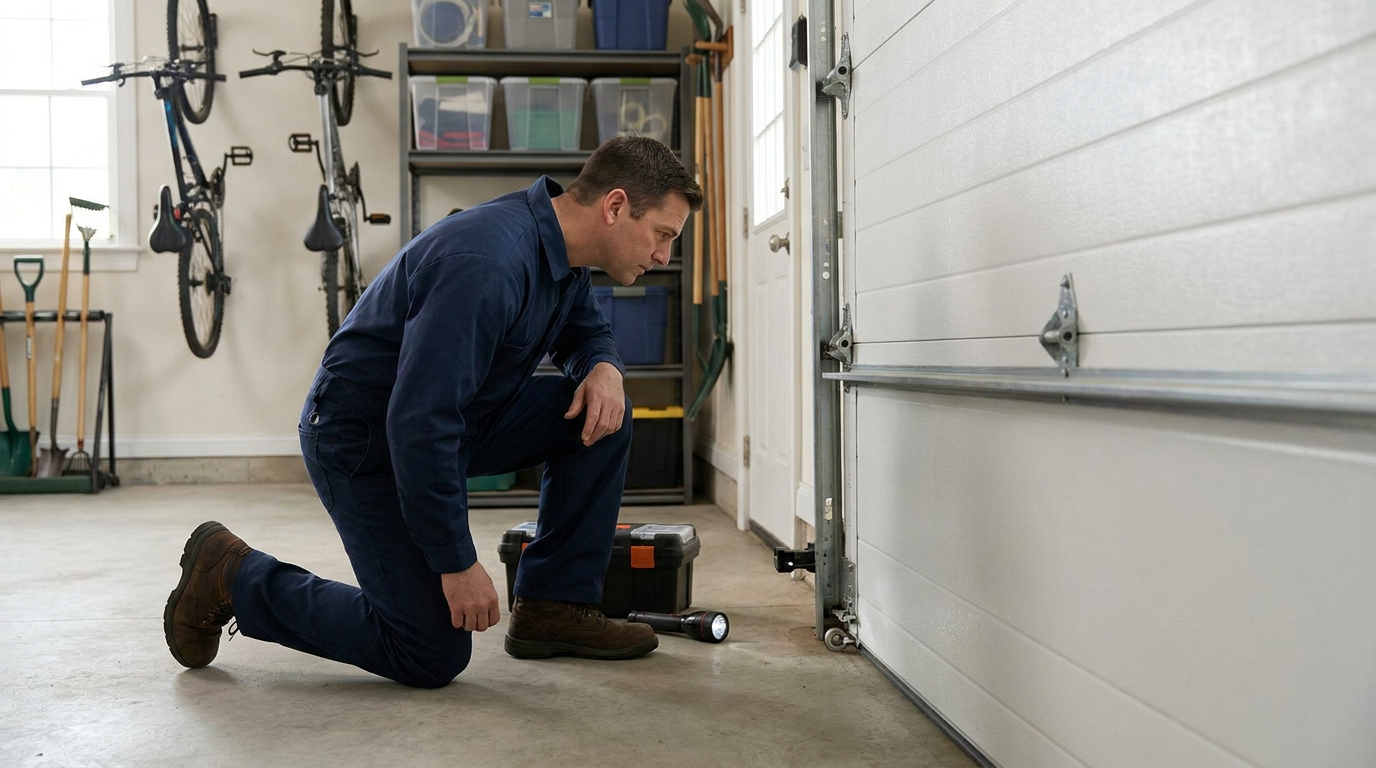
When a door drops too fast or feels heavy, the real diagnosis starts with the door itself, not the opener alone.
A technician will look for broken or worn springs, cable damage, cable drum issues, bent or damaged sections, and signs that the opener has been forced to work too hard. If the visible hardware does not show an obvious failure, the technician can manually check how the door feels and whether it stays balanced through its travel.
That hands-on balance check is important. A door can look mostly normal and still be unsafe or too heavy for the opener. The goal is to find the root cause before replacing parts that are only symptoms of the problem.
Spring King handles garage door repair for these kinds of safety issues throughout Central Connecticut.
What the Repair Usually Involves
The repair depends on the cause and whether the door was damaged after the problem started.
Common fixes include:
- Spring replacement when a spring is broken or worn out
- Cable repair or cable replacement when a cable has snapped, frayed, or come off the drum
- Opener repair or opener replacement if the motor or drive system was damaged from strain
- Panel repair or panel replacement if the door hit the ground and damaged the bottom section
Calling sooner often keeps the repair narrower. A spring problem caught early may stay a spring problem. Waiting and continuing to press the opener button can add opener damage, cable damage, panel damage, or a more complicated service call.
Do Not Wait on a Door That Drops Fast
A garage door that slams shut, drops too fast, or suddenly feels heavy is a safety concern. The longer it goes untreated, the more dangerous it can become, and the more likely additional parts will need repair or replacement.
If your door is acting this way, stop using it and keep the area clear. Make a safe visual note of anything obvious, such as a broken spring or loose cable, then schedule a professional inspection.
Spring King Garage Doors helps homeowners across Hartford, Middlesex, and New Haven counties diagnose and repair unsafe garage door problems. If your door is dropping fast or feels too heavy, contact Spring King and we will help you figure out the next safe step.
Need garage door help in Connecticut?
Spring King serves Middletown and 30+ towns across Central CT. Fast response available.
Add Spring King as a Preferred Source on Google