Why Is My Garage Door So Noisy? Troubleshooting and When to Call for Help
Few things disrupt household peace quite like a garage door that sounds like it's grinding its way through a scrap yard. If you've got a bedroom, nursery, or home office near the garage, a noisy door isn't just an annoyance — it's a quality-of-life issue.
The good news: most garage door noises have identifiable causes, and many can be addressed before they become major problems. If your issue is less about noise and more about a door that reverses or will not close unless you hold the wall button, that usually points to the safety sensor system instead. Here's a room-by-room (well, noise-by-noise) guide to figuring out what's going on.
Common Garage Door Noises and Their Likely Causes
Squealing or Screeching
Most common cause: Dry or worn rollers.
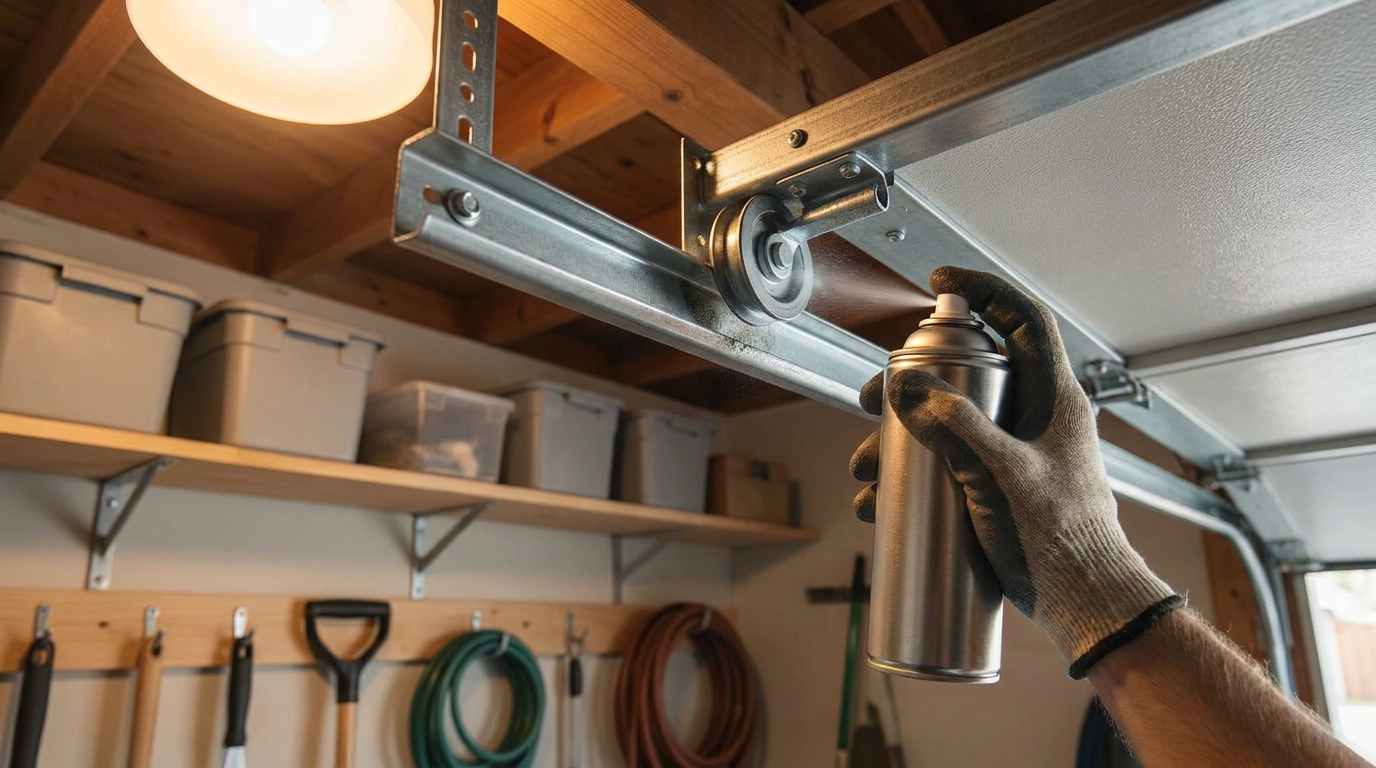
Metal rollers running on metal tracks without lubrication will screech. This is the single most common source of garage door noise, and it's often the easiest to address.
What to try: Apply a silicone-based or lithium-based garage door lubricant to all rollers, hinges, and the torsion spring. Avoid WD-40 — it's a solvent and cleaner, not a long-term lubricant. It evaporates quickly and can actually attract dust and grime.
If lubricating the rollers helps temporarily but the noise returns quickly, the rollers themselves may be worn and need replacement. Nylon rollers are significantly quieter than standard steel rollers and are a worthwhile upgrade. Our focused guide to garage door roller replacement explains how grinding, ticking, and short-lived improvement after lubrication point to worn rollers. Noise paired with a door that strains, starts upward, and then stops is more urgent; see our guide to why a garage door opens a few inches, then stops before continuing to run the opener.
Grinding or Scraping
Most common cause: Misaligned tracks or worn rollers.
A grinding sound, especially if it's consistent along the door's travel, often indicates that the rollers aren't moving smoothly in the tracks. This could be due to:
- Tracks that have shifted or bent slightly
- Rollers with flat spots or bearing failure
- Debris in the track channel
What to try: Visually inspect the tracks for obvious bends, gaps, or debris. Wipe them down with a clean cloth. If the tracks look straight and clean but the grinding persists, the rollers likely need replacing or the tracks need professional realignment.
Rattling or Vibrating
Most common cause: Loose hardware.
Every time your garage door opens and closes, vibration works on every nut, bolt, and bracket in the system. Over months and years, hardware loosens.
What to try: With the door closed, carefully tighten all visible bolts on the hinges, track brackets, and opener mounting hardware using a socket wrench. Don't overtighten — snug is sufficient.
Also check the opener itself. The chain or belt on an opener can develop slack over time, causing a slapping or rattling sound during operation. Adjusting the chain tension is usually straightforward — consult your opener's manual.
Banging or Popping
Most common cause: Spring issues or panel flex.
A single loud pop or bang can be alarming. If it happens once and the door stops working, start with our guide to what that loud bang means when your garage door won't open. You've likely experienced a broken spring — a common issue we covered in detail in our spring repair guide.
If the popping sound happens repeatedly during travel, it could be:
- Torsion springs that need adjustment (coils releasing unevenly)
- Panels flexing due to insufficient strut reinforcement (common on wider doors)
- Worn lift cables snapping taut
These should be evaluated by a professional. Spring and cable work involves components under high tension. If the noise is paired with a loose cable, cable wrapped incorrectly, or a garage door moving unevenly or crooked, stop operating the door until it is inspected. Our cable guide also explains what it means when a garage door cable comes off the drum or pulley.
Rumbling or Low-Frequency Humming
Most common cause: The opener's drive type.
Chain-drive openers are inherently louder than belt-drive models. The chain running on the rail creates a low rumble that transmits through the ceiling and walls. If your garage is attached to your home and the opener is chain-drive, this is a sound you'll always live with unless you upgrade to a belt-drive or wall-mount opener.
LiftMaster's belt-drive models are notably quiet and a popular upgrade for homeowners in West Hartford, Meriden, and other communities where attached garages are the norm.
The Maintenance Checklist: Your First Line of Defense
Performing these tasks twice a year helps prevent most noise problems before they start. If the noise is paired with a heavy-feeling or jerky door, our guide on whether a garage door tune-up is worth it explains why a professional balance check matters.
Use this maintenance checklist as your first line of defense:
- Lubricate all moving parts. Rollers, hinges, torsion springs, and bearing plates. Use silicone or lithium lubricant.
- Tighten all hardware. Hinge bolts, track brackets, opener brackets.
- Inspect rollers. Look for chips, flat spots, or wobble. Replace worn rollers.
- Check track alignment. Tracks should be plumb (vertical sections) and level (horizontal sections). Look for gaps between the roller and track.
- Test the door balance. Disconnect the opener and manually lift the door halfway. It should stay in place. If it drifts up or down, the springs need adjustment — call a professional.
- Inspect the opener chain or belt. Adjust tension per the manufacturer's instructions if needed.
When to Call a Professional
Some noise sources are homeowner-friendly. Others are not. Call for professional repair when:
- The noise is accompanied by the door moving unevenly, jerking, or stalling
- You suspect a spring, cable, or track issue
- Lubricating and tightening hasn't resolved the noise
- The door is vibrating the walls or ceiling noticeably
- You hear a noise you can't identify
A trained technician can pinpoint the source quickly and determine whether a simple adjustment, a component replacement, or a broader repair is needed.
Don't Ignore Persistent Noise
A noisy garage door isn't just annoying — it's often a warning that something is wearing, loosening, or failing. Addressing it early is almost always less expensive than waiting for a component to fail completely.
If your garage door has been getting louder and basic maintenance hasn't helped, give us a call. We'll figure out what's going on and get things running quietly again.
Frequently Asked Questions
Are nylon rollers really that much quieter than steel?
Yes, dramatically. Nylon rollers with sealed bearings are the single biggest noise-reduction upgrade most homeowners can make. They run quieter, don't require as much lubrication, and last a long time. They cost a bit more than steel rollers but are worth it for any attached garage.
My garage door was quiet until this winter — why did it suddenly get loud?
Cold temperatures thicken lubricant and cause metal components to contract slightly, which increases friction and noise. Metal-on-metal contact is naturally louder in cold weather. Re-lubricating with a cold-rated silicone spray often helps. If not, components may have worn to the point where cold temperatures push them over the noise threshold.
Can a noisy garage door damage other parts of the system?
It can. Worn rollers can damage tracks. Loose hardware can allow components to shift, causing cascading alignment issues. A struggling opener works harder and wears faster. Treating the noise isn't just about quiet — it's about preventing downstream damage.
Need garage door help in Connecticut?
Spring King serves Middletown and 30+ towns across Central CT. Fast response available.
Add Spring King as a Preferred Source on Google