Why Your Garage Door Opener Hums But Won't Move
Garage door openers are designed to operate smoothly, but sometimes you might encounter a frustrating situation: the opener hums, indicating it's receiving power and trying to work, yet the garage door remains stubbornly in place. In Central Connecticut, where a lot of homes have older openers and the weather swings hard from season to season, this problem shows up often. The good news: it usually traces back to one of a handful of causes, and a little order to your checks saves a lot of guessing.
The hum from your garage door opener is a crucial piece of diagnostic information. It tells you that the motor is engaged and drawing power, but something is preventing the transfer of that power to actually lift or lower the door. This is fundamentally different from an opener that makes no noise at all, which might signal a power supply problem or a tripped circuit breaker. A hum means the opener is trying to work, but something between the motor and the door has given out or come loose.
One quick warning before you dig in. A hum and a grind are not the same thing, and they point in very different directions. If what you hear is closer to grinding, grating, or screeching, treat it as more serious. Grinding noises typically suggest that internal components within the opener, such as gears or the drive mechanism, are severely worn, stripped, or damaged. Stop using the opener right away. Continuing to operate it can cause irreparable damage to the opener unit, leading to significantly more expensive repairs or the need for a complete replacement.
Common Causes of an Opener's Hum Without Door Movement
Several factors can lead to your garage door opener humming but failing to move the door. Recognizing these potential culprits is the first step toward resolution.
The Trolley and the Manual Release Cord
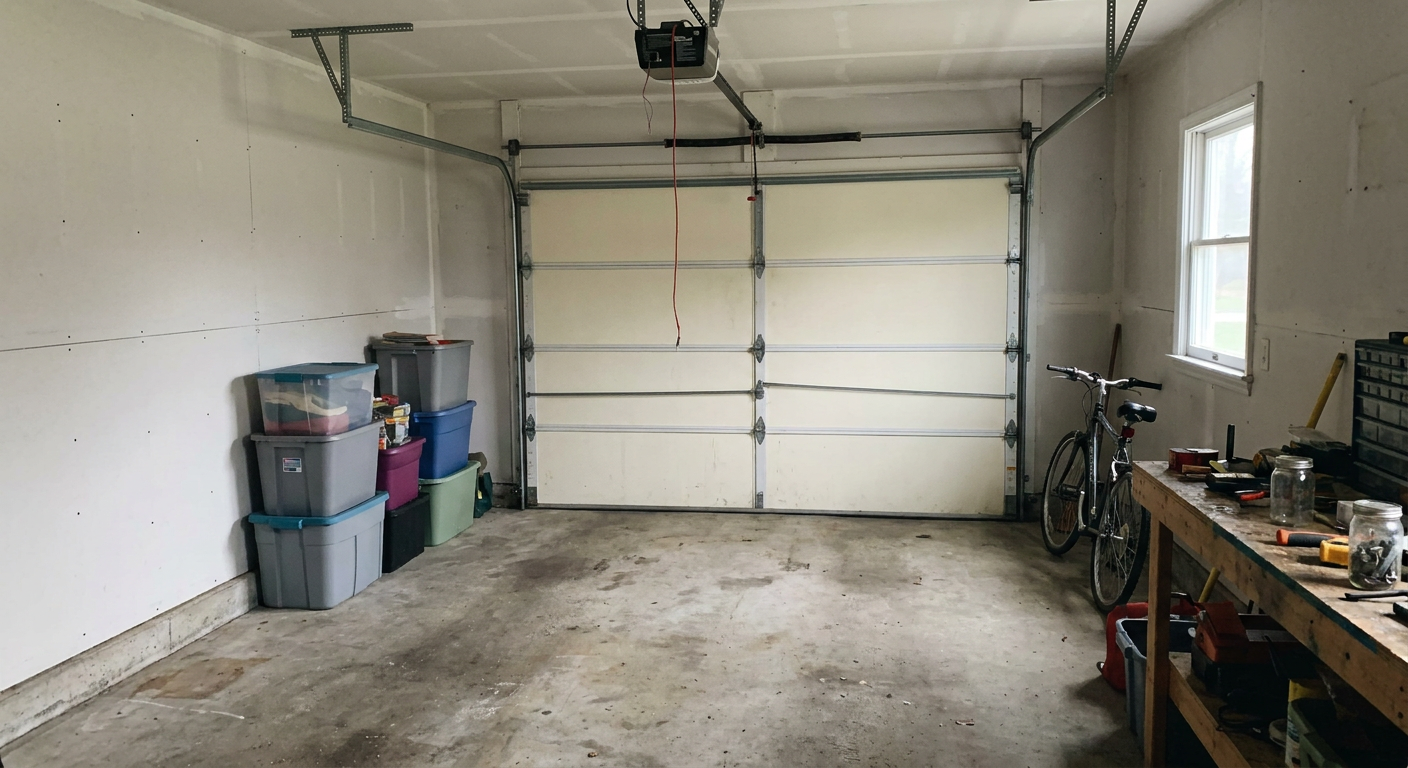
The most common cause we see is a disengaged trolley. The trolley is the component that slides along the opener's rail, and it's this part that connects to the garage door via an arm. When the trolley is disconnected from this arm, the opener motor will spin and hum, but there is nothing for it to push or pull, hence the door stays still.
This often occurs when the manual release cord, usually a red handle dangling from the opener motor unit, has been activated. Homeowners may pull this cord to disengage the opener from the door, allowing for manual operation, particularly during power outages. If your opener went quiet after a storm or outage, our guide to what to check when a garage door opener is not working after a power outage is a good companion read. The subsequent challenge is re-engaging the trolley so the opener can take over again.
Steps for Re-engaging the Trolley
- Identify the Trolley: Locate the part that moves along the opener's track. This is the trolley. You will also see an arm extending from it that connects to the garage door.
- Pull the Red Cord: The red cord's function is to disengage the trolley. To re-engage it, you will need to pull this cord. The exact direction can differ by opener model. Often, you'll need to pull the cord down and back towards the rear of your garage. Some models may require pulling it forward, and others are designed to automatically re-engage the trolley on its next cycle after the cord is pulled.
- Confirm Re-engagement: After pulling the cord, listen for a click or observe the trolley arm. It should now be firmly attached to the bracket on your garage door, indicating it is re-engaged.
- Test the Opener: With the trolley re-engaged, attempt to operate the garage door opener. If the issue was simply a disengaged trolley, the door should now move.
Re-engaging the trolley is not always a one-and-done. If the garage door is completely shut, it can make it difficult for the trolley to properly latch onto the door's connecting bracket. In such cases, it can be beneficial to manually lift the door slightly, if it's safe to do so, or to briefly run the opener to move the trolley back a short distance along the rail. This can create enough space and alignment for the trolley to connect and lock in. Familiarizing yourself with your specific opener's mechanism, including how the trolley locks and any spring latches, is important.
If you observe that the trolley is moving along the rail when the opener hums, but the door itself does not move, this points towards a problem with the door's balance, its tracks, or the connection to the trolley arm. Conversely, if the trolley is not moving at all when the opener hums, this signifies a more significant internal issue within the opener motor or drive system.
Potential Issues with Door Springs and Safety Sensors
While a disengaged trolley is a common explanation, other integral parts of the garage door system can also cause the opener to hum without movement.
Garage Door Springs
The springs, whether torsion springs mounted above the door or extension springs along the tracks, are responsible for counterbalancing the significant weight of your garage door. If your garage door feels excessively heavy when you try to lift it manually, or if it doesn't stay open or closed smoothly, this strongly suggests a problem with the springs. When a spring is broken or weak, the opener ends up lifting the door's full weight on its own. That is a quick way to overload the motor and leave it humming while the door sits still. Handle springs before you touch the opener. Springs hold serious tension, so this is not a homeowner job. Any spring work should be done by trained professionals offering professional broken spring repair.
Safety Sensors
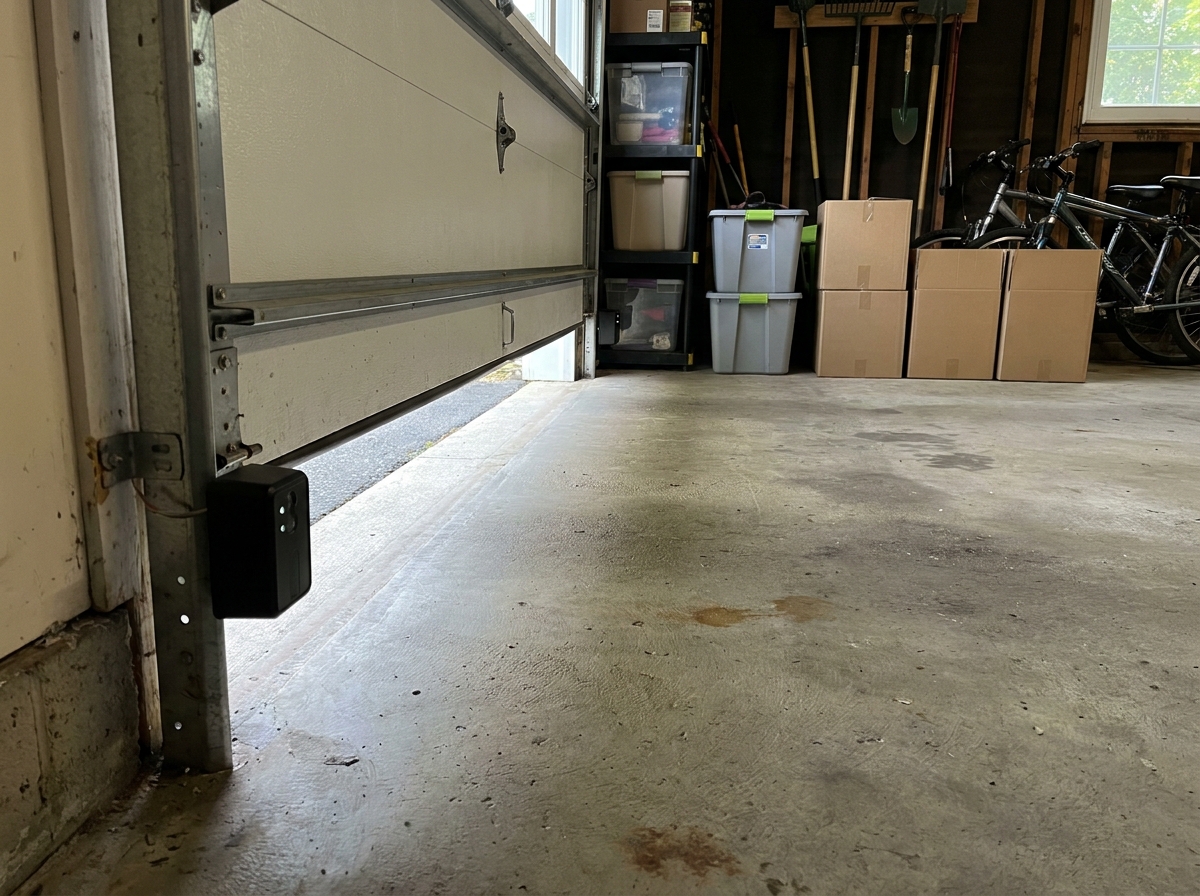
Modern garage door openers are equipped with safety sensors, usually located near the bottom of the door tracks. These sensors are designed to detect obstructions in the door's path, preventing it from closing on a person, pet, or object. If these sensors become misaligned, are dirty, or if one of them fails, they can continuously signal an obstruction, causing the opener to stop or reverse. This can manifest as the door moving slightly before stopping, or opening and then immediately closing. You can often check the status of these sensors by looking for small indicator lights on each unit. If the lights are not illuminated or are blinking erratically, it may indicate a problem. For more details on troubleshooting sensor issues, our blog post on garage door closes then opens back up provides helpful guidance.
Homeowner Diagnostic Steps: A Practical Order
When faced with an opener that hums but doesn't move, a systematic approach can help pinpoint the problem without unnecessary complexity.
- Listen Carefully to the Sound: Is it a steady hum or a grinding noise? As noted, grinding demands immediate cessation of opener use and professional help.
- Observe the Trolley: Is the trolley, the part that travels on the rail, moving when the opener hums? If it's not moving at all, this suggests an internal opener issue. If it is moving but the door isn't, the problem lies with the connection or the door itself.
- Check the Manual Release: If the trolley is not moving, or if you suspect it might have been disengaged, locate the red emergency release cord. Follow the steps outlined earlier to attempt re-engagement.
- Inspect Safety Sensors: Look for the small sensors near the bottom of the door tracks. Ensure they are free of debris and that the indicator lights on both sensors are lit and steady. Check for any obstructions in the doorway.
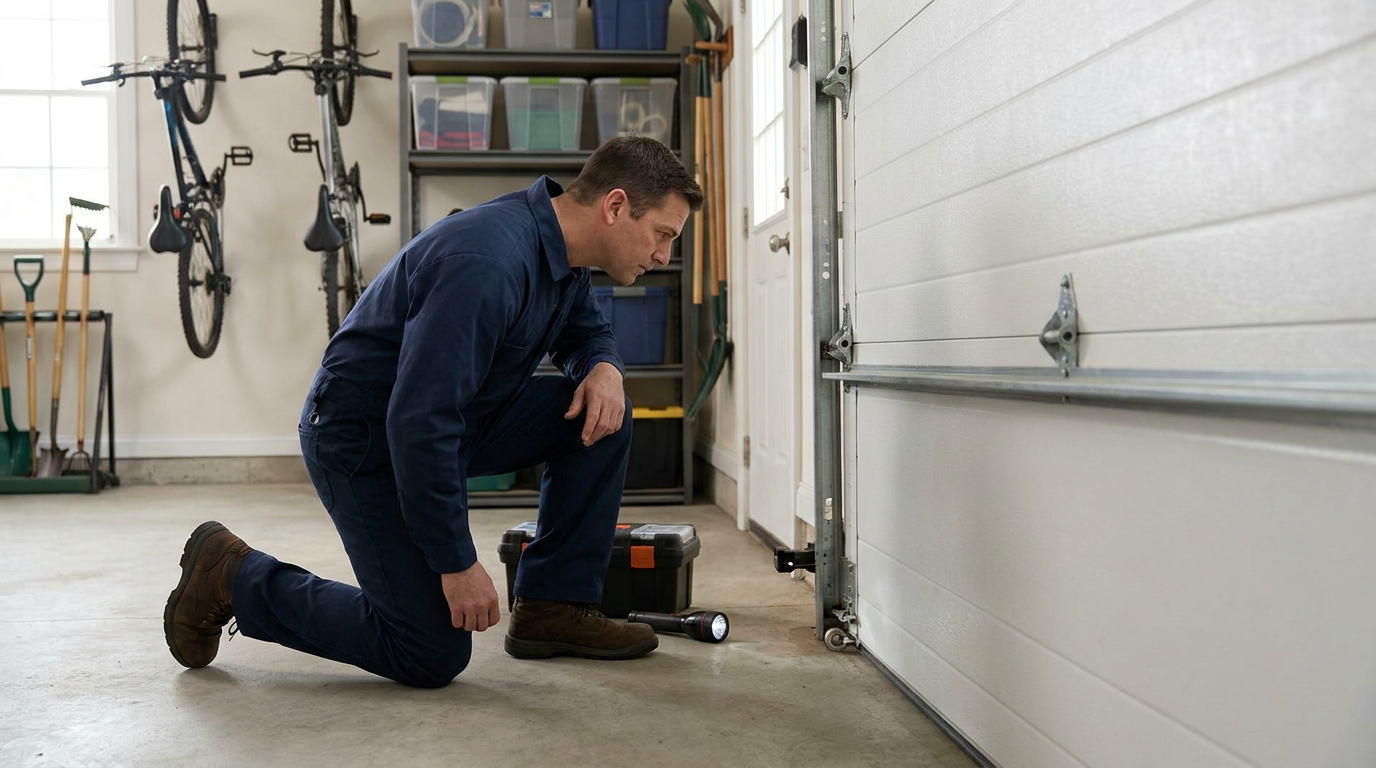
- Assess Door Balance and Weight: If you can safely disconnect the opener (often by pulling the red cord), try to lift the door manually. Does it feel excessively heavy or unbalanced? This points to a spring issue that needs professional attention before the opener is used.
If after these checks the problem persists, or if you are uncomfortable performing any of these steps, it is time to contact a professional.
What to Have Ready When You Call for Service
To ensure a swift and accurate diagnosis when you contact Spring King Garage Doors, having certain information prepared can be very helpful for our technicians:
- Opener Brand and Model: Knowing the manufacturer (e.g., LiftMaster, Chamberlain, Genie) and, if possible, the model number of your garage door opener can help us anticipate potential issues and bring the right parts.
- Description of the Problem: Clearly explain what happens when you try to operate the opener: the humming sound, the lack of door movement, any other noises, and when the issue started.
- Recent Events: Mention any recent power outages, storms, or manual operations of the garage door, as these can often be directly related to the problem (like the trolley disengagement).
- Door Characteristics: Note if the door feels unusually heavy or if there are any visible issues with the springs or cables.
- Safety Sensor Status: If you've checked them, report on the condition of the indicator lights on your safety sensors.
That context helps our team arrive prepared, which usually means a faster diagnosis and less time standing around waiting.
Common Homeowner Mistakes to Avoid
When troubleshooting garage door opener problems, homeowners can sometimes inadvertently make the situation worse. Being aware of these common pitfalls can save you time and money:
- Ignoring Grinding Noises: As emphasized, a grinding sound indicates severe mechanical damage. Continuing to operate the opener will likely cause more extensive and expensive damage.
- Tampering with Springs or Cables: Garage door springs and cables are under extreme tension and can cause serious injury if mishandled. Never attempt to adjust, repair, or replace these components yourself.
- Overriding Safety Features: Do not attempt to bypass safety sensors or other built-in safety mechanisms. These are critical for preventing accidents.
- Forcing the Opener: If the door is not moving, do not repeatedly try to force the opener. This can strain and damage the motor and internal components.
- Connecting an Opener to an Unbalanced Door: If your door is heavy or unbalanced due to spring issues, attempting to connect or operate the opener can overload and damage the opener motor. Always address spring issues first.
Repair vs. Replace: A Strategic Decision
When an opener starts failing, the repair-or-replace question comes down to two things: how old the unit is, and whether the parts are still under warranty.
If your opener is still covered by a manufacturer's warranty, repair is almost always the smarter financial call. Warranties typically cover the cost of necessary parts and labor for covered malfunctions, making repair a cost-effective solution. Always check the specific terms and conditions of your opener's warranty.
However, for older openers that are out of warranty, the cost of replacement parts, coupled with professional labor charges, can sometimes approach or even exceed the price of a new opener unit. In these situations, homeowners face a more complex decision. Consider the overall condition and expected lifespan of your current opener. If it's an older model that has required previous repairs or seems to be nearing the end of its service life, investing in a new, modern opener might provide greater long-term reliability and potentially better features. Conversely, if the issue is a minor, isolated problem on an otherwise well-functioning older opener, a targeted repair might still be sensible. For detailed information on the scope of our garage door opener repair services, please visit our dedicated page.
When Professional Help is Essential
Some of this you can handle yourself. Some of it you should not touch. Here is where we draw that line.
If your garage door opener hums, but the trolley on the rail is not moving at all, this is a strong indicator of a significant internal problem within the opener's motor, gear assembly, or drive system. Continuing to run the opener in this state can cause further damage, potentially leading to a more expensive repair or the need for a complete replacement. At this point, it is best to stop trying to operate the opener and call a professional.
Similarly, any audible grinding or squealing noises from the opener mechanism are a clear signal to cease operation immediately. These sounds typically indicate severe mechanical wear, stripped gears, or damaged components that require expert assessment and repair.
Working with garage door springs and cables carries inherent dangers due to the high tension involved. These components are under immense pressure and can cause severe injury if they break or if attempts are made to adjust or repair them without the proper knowledge, training, and specialized tools. For any issues related to your garage door's springs or cables, it is always safest to rely on professional service.
Accurate diagnosis usually needs eyes on the actual unit. Knowing the brand helps us pull the right parts, but a real answer comes from a technician checking the opener, the door, the springs, and the tracks in person. If you are unsure about the root cause of the problem, or if your own troubleshooting efforts have not yielded a solution, contacting a qualified professional is the most reliable path forward.
Trust Spring King Garage Doors in Central Connecticut
Encountering a garage door opener that hums without moving the door can be a significant disruption to your daily routine. Whether the cause is a simple disengagement of the trolley, a more complex internal opener issue, or a problem with your door's balance due to spring issues, Spring King Garage Doors is equipped to provide expert solutions. We work with homeowners across Hartford, Middlesex, and New Haven counties in Connecticut.
If you are in Central Connecticut and your opener hums but the door will not budge, or you are not sure what you are looking at, reach out to Spring King Garage Doors. We will tell you what is going on, what it takes to fix it, and whether repair or replacement makes more sense. Contact us through our contact page to schedule your service appointment and get your garage door working like new again.
Need garage door help in Connecticut?
Spring King serves Middletown and 30+ towns across Central CT. Fast response available.
Add Spring King as a Preferred Source on Google