Why Is My Garage Door Uneven or Crooked?
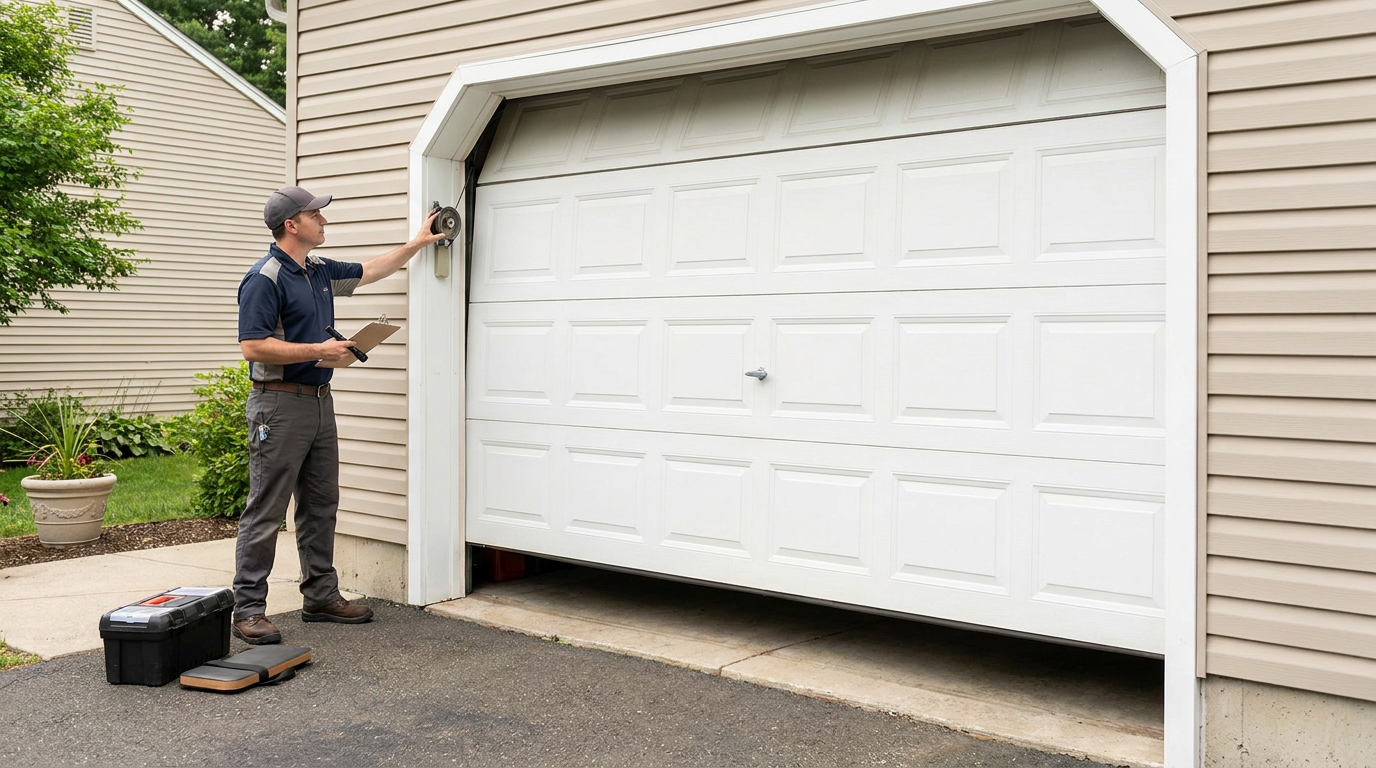
If your garage door is coming down crooked, sitting with one side noticeably lower than the other, or showing an uneven gap along the bottom, something in the system has failed or shifted. This is one of the more common issues we see on residential garage door repair calls across Central Connecticut, and it is often repairable, but it is not something homeowners should attempt to troubleshoot or correct on their own.
A crooked garage door involves the spring system, cables, drums, or hardware that operate under significant tension. The safest thing you can do is stop using the door, leave it in place, and call a local garage door company to diagnose the problem.
Here's what causes this issue, what to watch for, and exactly how we approach the repair.
Why a Garage Door Becomes Crooked or Uneven
A garage door does not become crooked randomly. Something specific has changed in the system - a component has worn out, slipped, seized, or was never set up correctly in the first place. The exact cause depends on whether your door uses extension springs or torsion springs, but the visible symptom is the same: one side of the door hangs lower or moves slower than the other.
The most common causes fall into three categories:Before a door becomes visibly crooked, a slower-than-usual opening can be one of the first signs the springs are out of balance, which we cover in our guide to a garage door that opens slowly, and catching it early can keep a small problem from turning into a bigger one. The most common causes fall into three categories:
- Spring or cable problems - imbalanced springs, cables that have come off drums or pulleys, or drums that have slipped out of position.
- Worn hardware - failed pulleys, seized hinges, or frozen rollers creating uneven friction.
- Track issues - overly tight track spacing on one side that drags against the door.
We'll break each of these down, but the key takeaway is that all of them require hands-on diagnosis by a technician who can safely work with the spring system.
Why You Should Stop Using the Door
This is important: if your garage door is visibly crooked or uneven, limit how much you operate it. Every cycle puts stress on a system that is already out of alignment.
Here's what can happen if you keep running a crooked door:
- The door can jam in the opening. A misaligned door puts uneven pressure on the tracks, and it does not take much for a roller to bind or the door to wedge itself partway up or down.
- The door can come out of the tracks entirely. This is a serious safety hazard. A door that leaves the tracks is no longer moving in a controlled path and can drop unpredictably.
- Secondary components fail. What starts as a single worn pulley or slipped drum can cascade into cable damage, bent tracks, or broken brackets if the door keeps running in a compromised state.
The recommended action is straightforward: close the door if you can do so safely, leave it as-is, and wait for a professional to take a look. If the door is stuck partway open or you cannot close it, don't force it - just leave it and call us.
Extension Spring Causes
Extension spring systems use one spring on each side of the door, running parallel to the horizontal tracks. Because each side has its own spring, balance between the two sides is critical. When an extension spring door starts coming down crooked, the usual suspects are:
Imbalanced Springs
If one spring has weakened, stretched, or was never properly matched to the other, the two sides of the door will not lift or lower at the same rate. The weaker side drops faster or sits lower. This is a spring repair issue that requires a technician to assess and correct the spring balance.
Improper Cable Routing
Extension spring doors use cables routed over pulleys at the top of the track and at the spring connection point. If a cable has slipped off a pulley, gotten tangled, or wasn't routed correctly during a previous repair, the door will track unevenly. We have written more about cable and pulley issues in our post on what to do when a garage door cable comes off the drum or pulley.
Worn or Failed Pulleys
The pulleys that route the cables on extension spring doors wear out over time. When a pulley bearing seizes or the pulley itself degrades, it creates friction on that side of the door. The cable does not move freely, so that side lags behind. This is a common cause of a gradually worsening crooked door - homeowners in Middlesex County and throughout the Hartford area often describe it as something that started small and got worse over weeks or months.
Torsion Spring and Cable Drum Causes
Torsion spring systems work differently. A single spring (or pair of springs) sits on a shaft above the door, with cable drums at each end. Cables wind around the drums as the door opens and unwind as it closes. When a torsion spring door becomes crooked, the problem is usually at the drum or cable level:
Slipped Cable Drum
The cable drums are set in a specific position on the torsion shaft and locked in place with set screws. If a drum slips - due to loose set screws, vibration over time, or improper installation - the cable on that side winds or unwinds at a different rate. The door comes down crooked because one cable is effectively longer than the other.
Drum Not Properly Set Before Tensioning
This is often the result of a previous repair that wasn't done correctly. If the drum wasn't positioned properly on the shaft before the springs were tensioned, the door may have worked acceptably for a while but gradually drifted out of alignment.
Cable Off the Drum
If a cable has come off the drum or isn't properly wound around it, that side of the door loses controlled movement. This can happen suddenly - homeowners sometimes hear a loud noise and then find the door sitting crooked. This is a situation where you absolutely should not try to operate the door.
All torsion-side repairs require taking tension off the springs before any work on the drums or cables. This is why crooked-door repair is not a DIY project. The springs store enough energy to cause serious injury.
Rollers, Hinges, Tracks, and Friction
Not every crooked door is a spring or cable problem. Sometimes the issue is mechanical friction on one side of the door:
- A seized roller that no longer spins freely in the track will slow that section of the door down.
- A seized hinge between panels creates a binding point that resists movement.
- Overly tight track spacing - if one track has been bumped inward (by a car, a bicycle, stored items leaning against it), it can squeeze the rollers and create drag.
These friction issues can make one side of the door lower more slowly than the other, producing a crooked appearance during travel even if the springs and cables are fine. A proper diagnosis catches these problems during the manual inspection.
What Spring King Checks During the Service Call
When we arrive for an uneven or crooked garage door, we follow a systematic inspection sequence rather than guessing at the cause. Here's what that looks like:
-
Inspect cable routing first. We confirm that cables are properly wound around drums (torsion systems) or correctly routed over pulleys (extension systems). Cable issues are the most common cause, so we start there.
-
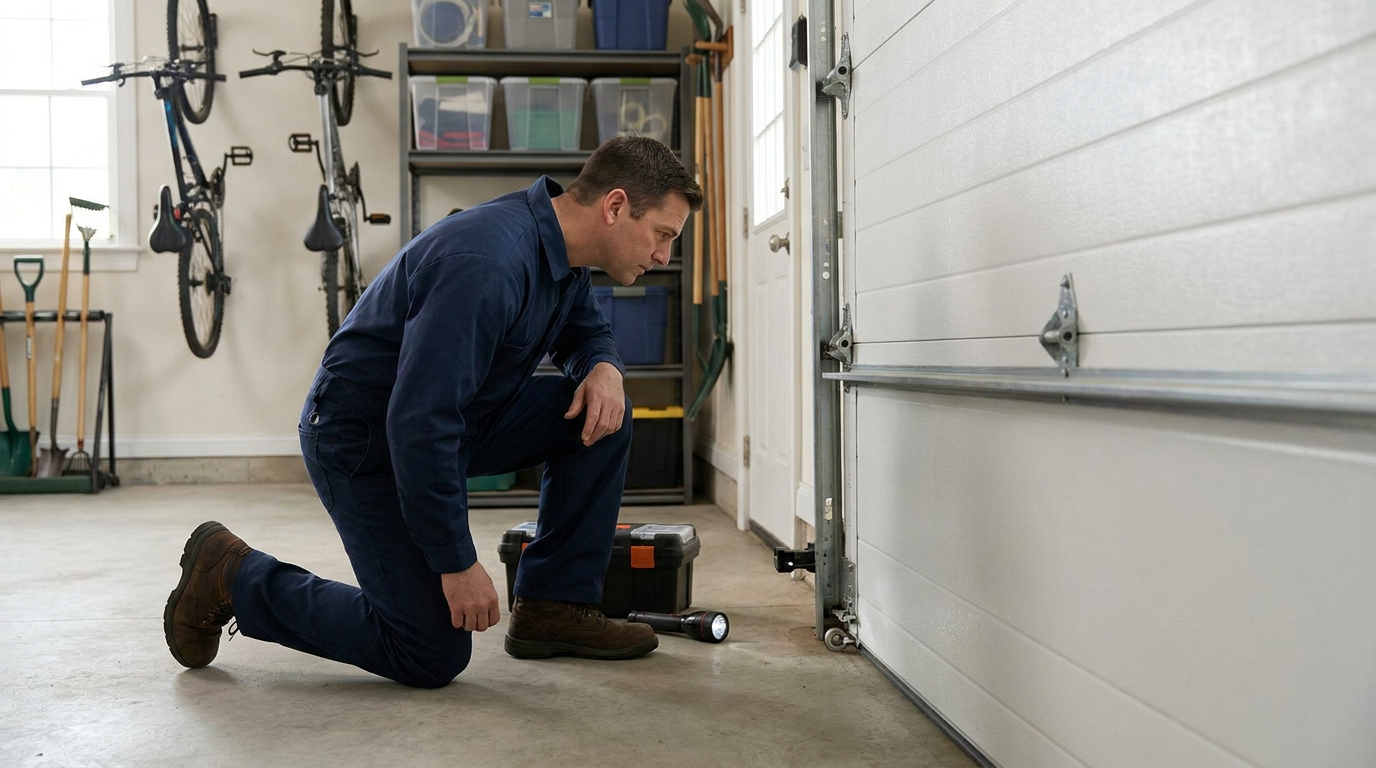
Run the door manually. With the opener disengaged, we move the door by hand to feel how smoothly it operates. This tells us a lot - we can feel where resistance or binding is occurring and listen for interference or worn components.
-
Check spring balance. On extension spring doors, we verify that the springs are properly balanced side to side. On torsion systems, we check overall spring tension and balance.
-
Test suspected pulleys. If we think worn pulleys are contributing to the problem, we will test with lubricant to see whether eliminating the friction changes the door's behavior. If lubrication resolves the unevenness, the pulleys need to be replaced - the bearings are worn out.
-
Reposition slipped drums if needed. On torsion systems where a drum has slipped, we take the tension off the springs, reposition the drum and cables to the correct setting, and then retension the springs.
-
Inspect all rollers and hinges. We check every roller and hinge for smooth operation, replacing anything that is seized or heavily worn.
Regular tune-up and maintenance service can catch many of these issues before they reach the point of a visibly crooked door.
What a Proper Repair Looks Like
When the repair is complete, here's what you should see:
- The door sits level when closed, with an even gap (or seal contact) along the bottom.
- The door moves smoothly by hand in both directions without binding or resistance.
- Spring balance is correct - the door stays in place when lifted halfway and released.
- The door runs normally with the opener, traveling smoothly without jerking or hesitation.
A Field Example
We recently serviced an extension spring door that had become severely crooked. The inspection revealed two problems working together: the springs were improperly balanced between the two sides, and the pulleys on one side were worn. Either issue alone would have caused some unevenness, but combined, the door was visibly tilted and getting worse with each use. Correcting the spring balance and replacing the worn pulleys brought the door back to level, smooth operation.
Repair vs. Replacement
The good news: a crooked or uneven garage door is typically a repair issue. Springs, cables, drums, pulleys, rollers, and hinges can all be serviced or replaced without replacing the entire door.
Replacement enters the conversation in one specific scenario: panel damage. The bottom brackets where the cables attach are mounted to the bottom panel. If that panel is severely damaged - from impact, rust, or long-term stress - the brackets may sit in a position that makes the door crooked no matter how well the rest of the system is adjusted.
Depending on the extent of the damage and whether a replacement panel is available for your door model, the fix might be replacing just that panel or replacing the full door. We cover more of the repair-versus-replacement decision in our garage door repair vs. replacement guide.
For homeowners in Middletown and throughout New Haven County, Hartford County, and Middlesex County, we see far more crooked doors that are repairable than ones that need full replacement.
What to Tell Spring King When You Call
When you contact us about a crooked or uneven garage door, a few details help us prepare for the service call:
- Is the door currently open or closed? This tells us what position we will be working with when we arrive.
- Does the door still open and close fully? Or does it get jammed or stuck somewhere during travel?
- When did you first notice the problem? Did it happen suddenly (suggesting a cable or drum issue) or gradually worsen (suggesting wear)?
- Do you see any loose or hanging cables? This is a strong indicator of the type of failure and helps us bring the right parts.
You don't need to diagnose the problem yourself - that is what the inspection is for. But these details help us understand the urgency and scope before we arrive.
If your garage door is sitting crooked or coming down unevenly, don't wait for it to jam or come off the tracks. If it has already left the track, read what to do when a garage door comes off track, then contact Spring King so we can diagnose it and repair it properly.
Need garage door help in Connecticut?
Spring King serves Middletown and 30+ towns across Central CT. Fast response available.
Add Spring King as a Preferred Source on Google