Garage Door Opening Slowly? Spring Balance Is Usually the Cause
Is Your Garage Door Taking Its Sweet Time?
Homeowners throughout Hartford, Middlesex, and New Haven counties sometimes notice a gradual slowdown in their garage door's operation. What was once a smooth, swift ascent can become a sluggish crawl, leaving you waiting longer and wondering if something is wrong. This common issue, while potentially frustrating, is usually a clear signal that something is off with your garage door's spring system. The good news is that slow opening is one of the more straightforward problems to diagnose, once you know what to look for. Understanding the underlying mechanics of your garage door can empower you to recognize potential issues early and ensure its longevity and smooth operation.
Why Spring Balance Matters More Than You Think
The most frequent culprit behind a slowly opening garage door is improper spring balance. Think of your garage door springs as your door's counterweights. They are designed to lift a significant portion of the door's weight, making it feel much lighter than it really is. When those springs are not properly tensioned, or when they begin to wear out, they stop doing their share of the work. That means your garage door is effectively much heavier than it should be, every time you hit the button. This delicate balance is crucial. A well-balanced door should feel almost weightless when operated manually, allowing the opener to perform its assistive role without undue strain.
What Your Opener Deals With
When springs fail to provide enough lift, the burden falls on your garage door opener. That electric motor is meant to assist the door, not to single-handedly carry its full weight. The result is an opener that struggles, labors, and moves the door very slowly as it fights against the extra weight. That constant strain is not just an annoyance. It puts your opener at real risk of long-term damage. Left unchecked, the motor can overheat and eventually burn out, which is why we take slow opening seriously. The motor in your opener is a sophisticated piece of equipment designed for specific tasks. When forced to do more than its intended share, its lifespan is dramatically reduced, leading to premature failure and costly replacements. This is why the expertise found on our garage door opener money page is so vital; an opener is a significant investment that needs to be protected.
A Field Case: The Door That Felt Like Lead
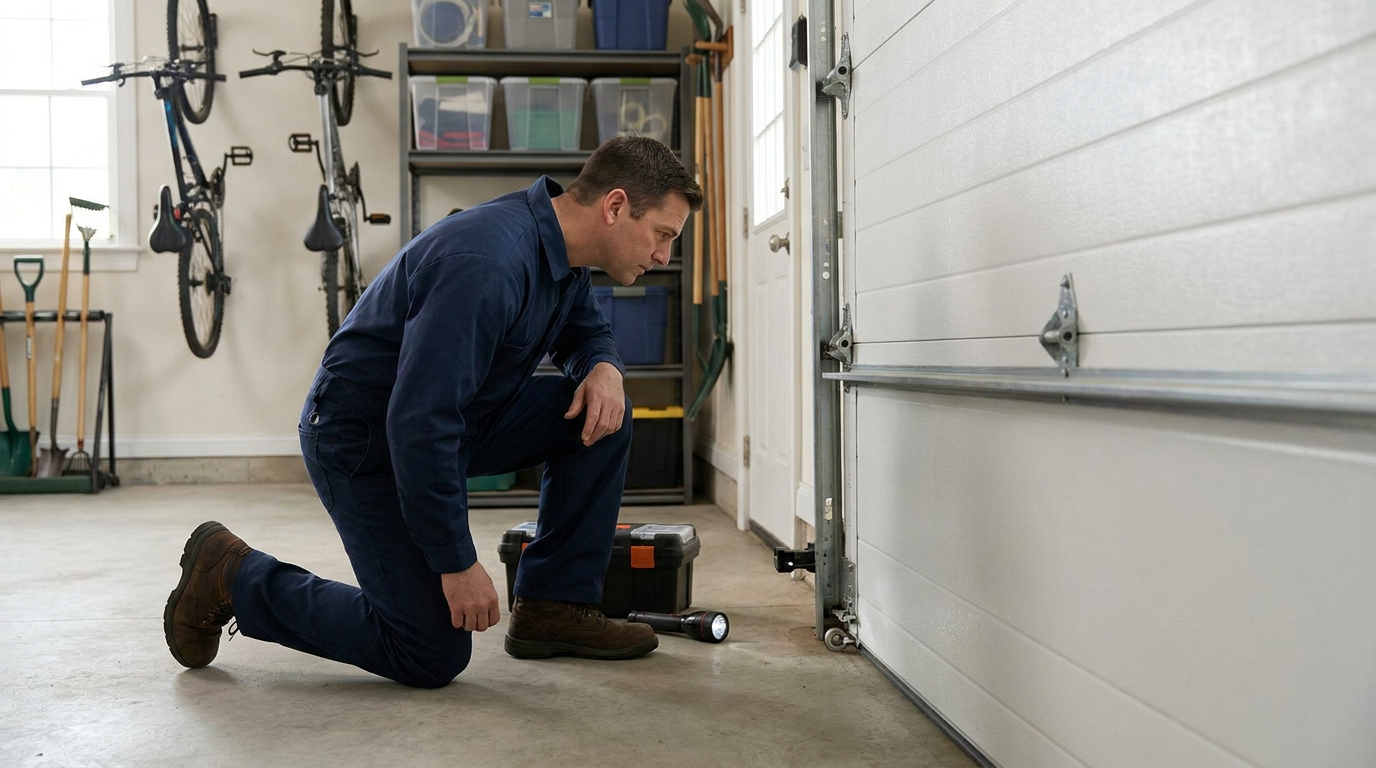
We have seen this scenario many times, and one call stands out. A homeowner reached out because their garage door had become noticeably slow, and they were worried about what was going on. When we arrived, the springs were the obvious suspect. We disconnected the opener to assess the door safely, and the first sign was immediate: lifting the door by hand took real effort. When we weighed the door with its current spring tension, it registered about 30 pounds. For a door of that size, the normal weight is roughly 5 pounds. In other words, the opener had been hauling far more than it was ever designed to. In this case, the fix was straightforward: the torsion springs simply needed an adjustment. Once they were properly tensioned, the door felt light again, and the opener stopped working overtime. The takeaway for homeowners is simple. A slow door is often an early, fixable warning, and catching it early can save you a much bigger bill later. This example underscores the importance of understanding how your garage door operates and the critical role of its spring system.
What Happens if You Wait
Ignoring a slow opening door can set off a chain reaction of problems and climbing costs. The opener's constant struggle to lift an unbalanced door puts heavy stress on its internal components. Over time, that can cause the motor to overheat and burn out. Replacing a garage door opener is a significant expense, typically in the range of $600 to $1,000 depending on the model and features. On top of that, worn springs can fail completely. A broken spring stops the door in its tracks and adds another layer of cost, commonly $300 to $500 for the spring repair itself. Working with a garage door opener that is being overtaxed by a heavy door is exactly the kind of issue we see escalate when it is ignored. The smart move is to address slow operation early, before it turns into opener failure or a broken spring. These are situations that can be entirely avoided with proactive maintenance and timely repairs. Exploring options for broken spring repair is far more costly and inconvenient than addressing a slow door.
The One Safe Check You Can Do Yourself
We always caution homeowners around garage door hardware, because it can be dangerous. That said, there is one simple, safe check you can do to get a feel for your door's balance. With the garage door fully closed, find the red emergency release cord that hangs from the opener's trolley. Pull it down and away to disconnect the door from the opener. Then try to lift the garage door by hand. If you can lift it smoothly with one hand, your door is probably balanced well. But if it feels excessively heavy and takes more than one hand to lift, the door is likely out of balance on the heavy side, and that is very likely the cause of your slow opening. Important: never attempt to adjust, repair, or tamper with the garage door springs or cables yourself. These components sit under extreme tension and can cause serious injury if handled wrong. Leave spring work to a trained professional. This simple check can give you valuable insight into your door's health without putting you at risk.
What a Fix Looks Like, and When to Replace
When we diagnose a slow door, the goal is to restore proper spring balance. Depending on what we find, the fix can be anything from a straightforward adjustment to a full spring replacement. If the door is simply out of adjustment, a precise tuning of the springs may be all that is needed to restore smooth, steady operation. If the door feels heavier than it should, that is a strong sign the springs are wearing out and have lost tension. If it has been several years since the springs were last changed, best practice is to replace them with new springs as preventative maintenance. New springs give you predictable, reliable performance instead of waiting for an unexpected failure. Replacing worn springs is one of the most common garage door repair jobs we handle, and doing it before a failure is far less stressful than dealing with a door that suddenly will not open at all.
Why Balance Is Worth Getting Right
A correctly balanced door feels light and easy to move by hand, and it lets your opener work the way it was designed to. Getting the balance right protects your opener, extends the life of your whole system, and keeps your door operating reliably for years. It also prevents the frustrating scenario where a door opens a few inches and then stops because the opener simply cannot handle the load. This scenario is a common symptom that can be avoided with proper spring maintenance, as discussed in our related post about garage door opens a few inches then stops. A balanced door contributes to overall system efficiency and safety.
Other Symptoms to Watch For
While a slow opening door is a primary indicator of spring imbalance, other symptoms can signal similar issues. If your garage door opens unevenly, hesitates, or makes popping or banging noises, these can also be signs that your spring system is not functioning correctly. Grinding sounds from the opener motor might suggest it is working harder than it should due to an unbalanced door. A door that slams down rapidly when manually operated, instead of holding its position or descending slowly, is another critical sign of a problem with the springs. Paying attention to these nuanced behaviors can help you identify potential problems before they become major issues.
The Connecticut Angle: Age, Weather, and Your Garage Door
Living in Connecticut, with its distinct seasons and often older home construction, presents unique challenges for garage doors. The extreme temperature fluctuations between our hot summers and frigid winters can affect the tension of garage door springs. Metal components can contract in the cold, potentially exacerbating existing wear or tension issues. Many homes in Hartford, Middlesex, and New Haven counties feature older construction, which can mean that original garage door components have been in place for a significant duration, increasing the likelihood of wear and tear. Attached garages, while convenient, also mean that the temperature inside the garage can fluctuate significantly with the outside weather, impacting the components. Regular professional inspections are crucial to ensure your door is adapting to these environmental factors.
How Often Should Garage Door Springs Be Replaced?
Garage door springs are designed for a specific number of cycles, which is essentially the number of times the door opens and closes. On average, residential garage door springs are rated for about 10,000 to 15,000 cycles. However, this is a general guideline. Factors like the quality of the springs, the weight of the garage door, the frequency of use, and environmental conditions can all influence their lifespan. A garage door that is used multiple times a day will see its springs reach the end of their service life much sooner than one used only a few times a week. While there isn't a strict calendar schedule for replacement, it is generally recommended to have springs inspected and potentially replaced every 7-10 years as a preventative measure, especially if you notice signs of wear or the door is operating sluggishly. A proactive approach to spring replacement is far more economical than waiting for a failure.
What to Expect During a Garage Door Service Call
When you schedule a garage door service with Spring King Garage Doors, you can expect a thorough and professional assessment. Our technicians will begin by listening to your concerns and observing the door's operation. They will perform the safe manual balance test we've discussed, checking the door's weight and how easily it lifts. A detailed inspection of the springs, cables, rollers, tracks, and opener system will follow. We'll look for signs of wear, damage, or misalignment. Based on our findings, we will explain the issue clearly, outline the necessary repairs or adjustments, and provide a transparent estimate before any work begins. Our goal is to ensure your garage door is operating safely, efficiently, and reliably.
Prevent It With an Annual Tune-Up
The simplest way to keep springs from drifting out of balance is to schedule an annual garage door tune-up. Regular maintenance lets a technician monitor the weight of your door, confirm the springs are balanced, and catch small issues before they grow into costly repairs. During a routine tune-up, our technicians check spring tension, lubricate moving parts, inspect cables and hardware, and test opener function. The whole point is to keep your door operating smoothly and safely throughout the year, so you are not blindsided by a slow door or a sudden failure. If you have not had a garage door tune-up in a while, it is one of the easiest ways to protect your investment and keep your daily routine moving without a hitch. Our tune-up/maintenance services are designed to catch potential problems early.
When to Call a Professional
If your garage door is opening slowly, or if it feels unusually heavy when you lift it by hand after the safe check above, it is time to call a professional. Persistent slowness, grinding noises, or jerky movement are all signs your garage door needs attention. It is especially important to call for service if you suspect a spring issue, or if you are not comfortable doing even the basic manual check. Springs are under high tension and should always be handled by trained technicians who can diagnose and repair the problem correctly and safely. For homeowners in Hartford, Middlesex, and New Haven counties dealing with a slow opening door, Spring King Garage Doors is here to help. Contact us today to schedule a service call, and we will get your door back to smooth, reliable operation.
Need garage door help in Connecticut?
Spring King serves Middletown and 30+ towns across Central CT. Fast response available.
Add Spring King as a Preferred Source on Google