Can You Replace One Damaged Garage Door Panel, or Do You Need a Whole New Door?
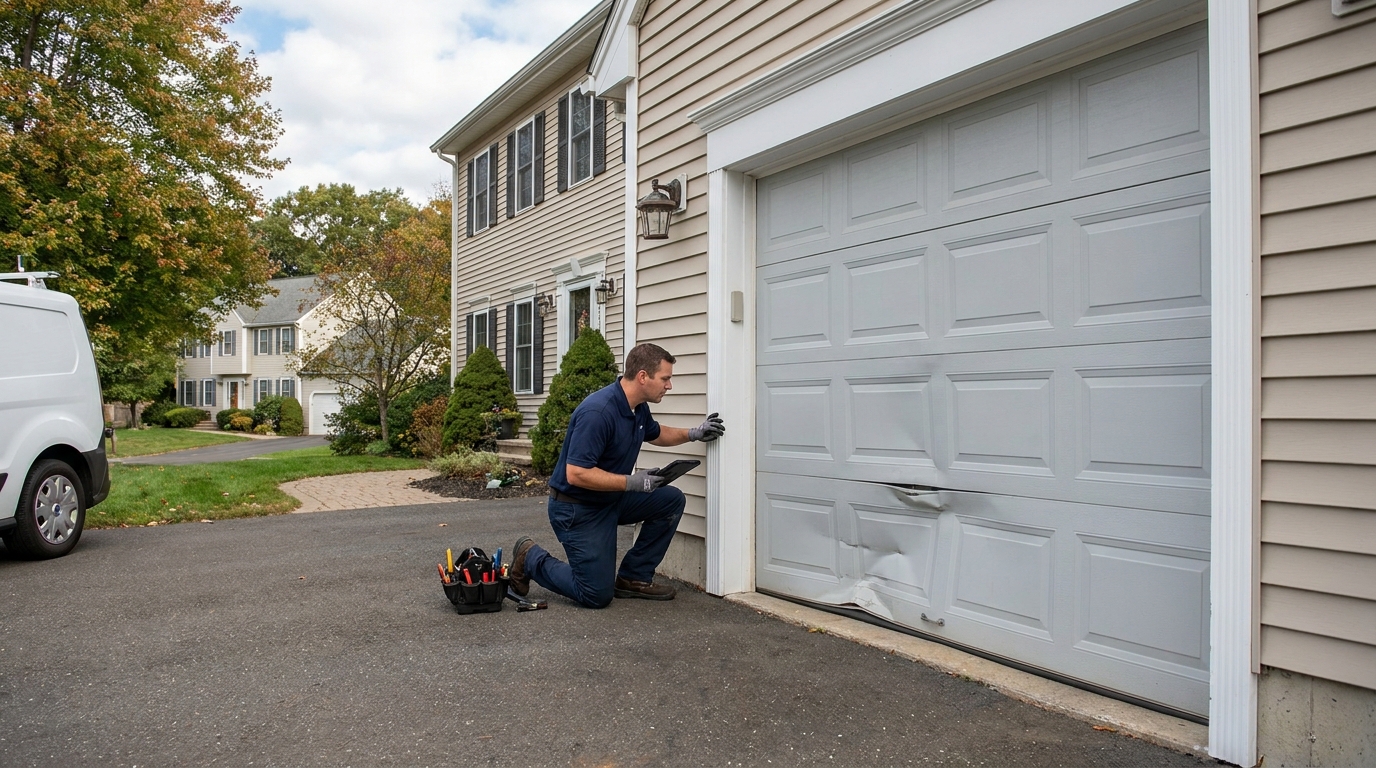
It happens more often than you might think. You back out of the driveway a little too quickly, a basketball takes an unfortunate bounce, or a winter storm sends something flying into the garage. Now you have one dented, cracked, or bowed garage door panel, and the big question lands: can you just replace that one section, or are you looking at an entirely new door?
The short answer is that yes, a single garage door panel can sometimes be replaced on its own. But it is not always the smartest move. The right path depends on the door's age, its current mechanical condition, whether the replacement panel is still available, and how much additional damage the impact may have caused. Here is what Central Connecticut homeowners need to know before making a decision.
Can One Garage Door Panel Be Replaced?
Garage doors are built in horizontal sections, and each section is a separate panel connected to the one above and below it by hinges. Because of this modular design, it is technically possible to remove a single damaged panel and install a new one in its place.
That said, the ability to replace one panel does not automatically mean it is the best option. The decision involves more than just swapping out the damaged section. It comes down to the cost of replacement panels, the mechanical condition of the rest of the door system, and the exterior condition of the door overall. When all three factors line up favorably, a garage door panel replacement can restore smooth operation and solid curb appeal at a fraction of the cost of a full door. When they do not, the money spent on a panel may be better invested in a complete new garage door installation.
When Panel Replacement Makes Sense
Panel replacement tends to be the right call when a few key conditions are met.
- The door is relatively new or well maintained. If the rest of the door is in good mechanical shape, with healthy springs, straight tracks, smooth rollers, and solid weatherstripping, then replacing one or two panels can extend the life of a system that still has plenty of good years ahead.
- The panel is still in production. Manufacturers produce specific panel styles, colors, and configurations for each door model. If the original panel is still available from the manufacturer, sourcing a replacement is straightforward.
- Two or fewer panels are damaged. When damage is limited to one or two sections, the repair cost stays well below the price of a new door, making panel replacement a cost-effective way to restore the door.
- The rest of the system checks out. If the impact only affected the panel itself and did not bend tracks, damage rollers, or compromise hinges and cables, replacing the panel is usually all that is needed.
When these boxes are checked, panel replacement is often the most practical and budget-friendly solution. Many homeowners across Hartford, Middlesex, and New Haven counties find themselves in exactly this situation after a minor backing-into-the-door incident, and a single panel swap gets them back to normal quickly.
When a Whole New Door May Be the Better Call
There are times when replacing a panel is possible but does not make strong financial sense. Here are the scenarios where full garage door replacement in Central Connecticut tends to be the smarter investment.
The door is aging and already needs work. If the door has been showing signs of wear, such as noisy operation, sluggish movement, rust along the door or bottom section, or deteriorating weatherseals, then replacing a panel is only addressing one piece of a larger puzzle. You would be putting a new section on a system that is approaching the end of its useful life.
The panel is no longer in production. Garage door manufacturers update and discontinue models over time. If your door is old enough that the original panel style is no longer available, finding an exact match may be impossible. In that case, full door replacement becomes the practical path forward.
The repair list keeps growing. A hard impact can do more than dent a panel. If the hit also bent a track, damaged rollers, knocked hinges out of alignment, or stressed a spring or cable, the cost of fixing everything starts to climb. When repair costs approach roughly half the price of a new door, upgrading to a new system often delivers better value. You get a door with full reliability, improved curb appeal, modern insulation and hardware, and the peace of mind that comes with a fresh start. For a deeper look at how to weigh those numbers, our guide on garage door replacement cost breaks down what Central Connecticut homeowners can expect.
You are already unhappy with the door. Sometimes a damaged panel is the push homeowners need to make a change they have been considering for a while. If the door's style, color, insulation, or overall look no longer fits your home, a replacement door lets you upgrade everything at once rather than patching a door you were already thinking about replacing.
If you are trying to decide between the two approaches, our garage door repair vs replacement guide walks through the factors in more detail.
Mechanical Damage Matters More Than the Dent
This is the point that catches many homeowners off guard. The dent or crack in the panel is the most visible problem, but it is not always the most important one. What matters most is what happened to the rest of the system when the panel was hit.
A significant impact can bend tracks, twist hinges, pop rollers out of their channels, or put sudden stress on springs and cables. These are the components that keep the door balanced, aligned, and safe to operate. If any of them were compromised during the incident, the door may not open or close properly, could bind or jam, or might become genuinely dangerous.
During any garage door repair visit for panel damage, a thorough inspection of these mechanical components is essential. Understanding how the damage happened and how much force was involved helps determine whether the panel is the only thing that needs attention or whether there is hidden damage elsewhere in the system. A door that looks like it only has a cosmetic problem can sometimes have bent tracks or stressed cables that need to be addressed before the door is safe to use regularly. If you have ever dealt with a door that has come off its tracks, you know how quickly a mechanical issue can escalate. Our post on what to do when a garage door goes off track covers that situation in detail.
Will the Replacement Panel Match?
This is one of the most common questions homeowners ask, and the honest answer is that it depends.
A replacement panel needs to match the manufacturer, model, style, and color of the original door. If the door is fairly new and the panel is still in production, the new section should be a close match right out of the box.
However, if the door has been exposed to years of Central Connecticut weather, the existing panels will have experienced some degree of sun fading and weathering. A brand-new panel installed next to panels that have been baking in the summer sun for a decade may look noticeably different in color or finish, even if it is the exact same product from the manufacturer.
This mismatch is purely cosmetic. It does not affect how the door operates at all. But many homeowners care about curb appeal as much as function, especially on a street-facing garage. One popular solution is to replace the damaged panel and then paint the entire door so all sections match. A fresh coat of exterior paint designed for your door's material can unify the look and give the whole door a refreshed appearance.
If a perfect visual match matters to you, it is worth discussing the options during the initial inspection so you can make an informed decision before any work begins.
Damage That Can Wait vs. Damage That Needs Service Now
Not every dented garage door panel is an emergency. Knowing the difference between damage that can safely wait and damage that needs immediate attention can save you stress and help you prioritize.
Damage That Can Usually Wait
Minor dents and small cosmetic dings that do not affect the panel's shape or the door's ability to open and close smoothly are generally not urgent. Many homeowners live with a small dent for months or even years without any operational issues. The door still seals, still balances, and still moves on its tracks without interference. You can schedule a repair at your convenience.
Damage That Needs Prompt Attention
Some types of damage should be addressed right away because they can affect the door's function, create safety risks, put extra wear on other components, and cause the problem to compound over time.
- Severely bowed or bent panels that interfere with the door's travel along the tracks
- Cracked or splitting panels that compromise the door's structural integrity or insulation
- Any impact that also damaged hinges, rollers, tracks, or cables beyond just the panel itself
- A panel that is interfering with the track, jambs, or adjacent sections of the door
If the door is binding, grinding, hanging unevenly, or making new sounds after an impact, those are signs that the damage goes beyond cosmetics. Operating a door with these issues can stress the opener, wear out parts faster, and create a situation where the door could fail unexpectedly. If damage is severe, meaning the door does not move freely, hangs at an angle, or a panel is visibly pushing into the track or jamb, stop using the door immediately and call for professional service. Continuing to operate a severely damaged door is one of the fastest ways to turn a manageable repair into a much larger and more expensive problem. If your door is hanging unevenly after an impact, our post on uneven or crooked garage doors explains why that matters.
What Homeowners Should Not Do After Damaging a Panel
It is natural to want to fix a problem as quickly as possible, especially when your garage door is stuck open and your belongings are exposed. But there are a few things homeowners should avoid doing after a panel is damaged.
Do not attempt to adjust or fix hinges yourself. Garage door hinges connect sections that move with the full weight of the door. Trying to straighten, remove, or reposition a hinge while the door is assembled can make the damage worse and create a safety issue.
Do not touch the cables. Garage door cables are under extreme tension from the spring system. A damaged panel can sometimes cause a cable to slip or fray, and handling a tensioned cable without professional equipment is genuinely dangerous. This is not a DIY task under any circumstances.
Do not force the door open or closed. If the door is binding or resisting movement, forcing it can bend tracks, snap cables, or cause the door to fall. If the door will not move smoothly on its own or with the opener, leave it where it is and call a professional.
Do not keep testing the opener if the door is binding. Repeatedly trying to force a damaged door through its travel can bend tracks, damage the opener, or cause the door to move unpredictably.
The safest approach after significant panel damage is to leave the door in its current position, secure your garage as best you can, and schedule a professional inspection.
What Spring King Checks During a Panel Replacement Visit
When we visit a home in Central Connecticut to evaluate a damaged garage door panel, we do much more than look at the dent. Our goal is to give you a complete picture so you can make the right decision for your home and your budget.
During the visit, we inspect and note the extent of the panel damage, including whether adjacent panels were affected. We identify the door's manufacturer, model, and size so we can determine whether replacement panels are still available. We evaluate the overall health of the mechanical system, including springs, cables, tracks, rollers, hinges, and the opener. We look at the exterior condition of the entire door to assess how well a new panel will match. And we talk with you about how the damage happened and how old the system is, because both of those details help us determine the most practical path forward.
If panel replacement makes sense, we will walk you through the process, timing, and cost. If the inspection reveals that the repair list is growing or that the door's age and condition point toward replacement being the stronger value, we will explain why and help you understand your options for a new door. Either way, you will have the information you need to make a confident choice.
Get Help Choosing the Right Repair Path
A damaged garage door panel does not automatically mean you need a brand-new door, but it does not always mean a simple swap is the answer either. The best path depends on your specific door, its age, its condition, and what the impact did to the rest of the system.
If you are a homeowner in Hartford, Middlesex, or New Haven County dealing with a dented, cracked, or damaged garage door panel, we are happy to take a look and help you figure out the smartest next step. Whether that turns out to be a straightforward panel replacement or a conversation about upgrading to a new door, you will get honest guidance based on what we actually see, not a one-size-fits-all recommendation.
Contact Spring King to schedule an inspection and get a clear answer on your damaged garage door panel.
Need garage door help in Connecticut?
Spring King serves Middletown and 30+ towns across Central CT. Fast response available.
Add Spring King as a Preferred Source on Google