Why Your Garage Door Won't Close Unless You Hold the Button
If your garage door opens normally but will not close from the remote, exterior keypad, car HomeLink button, or myQ app, then only goes down when you press and hold the wall button inside the garage, you are dealing with a very specific symptom.
In most cases, it points to the safety sensor system. If your issue is the opposite and the door starts to open but only moves a little, read our related guide on why a garage door opens a few inches, then stops.
At Spring King Garage Doors, this is a common garage door repair call across Middletown and Central Connecticut. The good news is that the problem is often simpler than homeowners expect. It may be dirty sensor lenses, a blocked beam, a bumped sensor, a loose wire, or a failed sensor. The important part is knowing what you can safely check yourself and when it is time to call a professional.
Why Holding the Wall Button Works
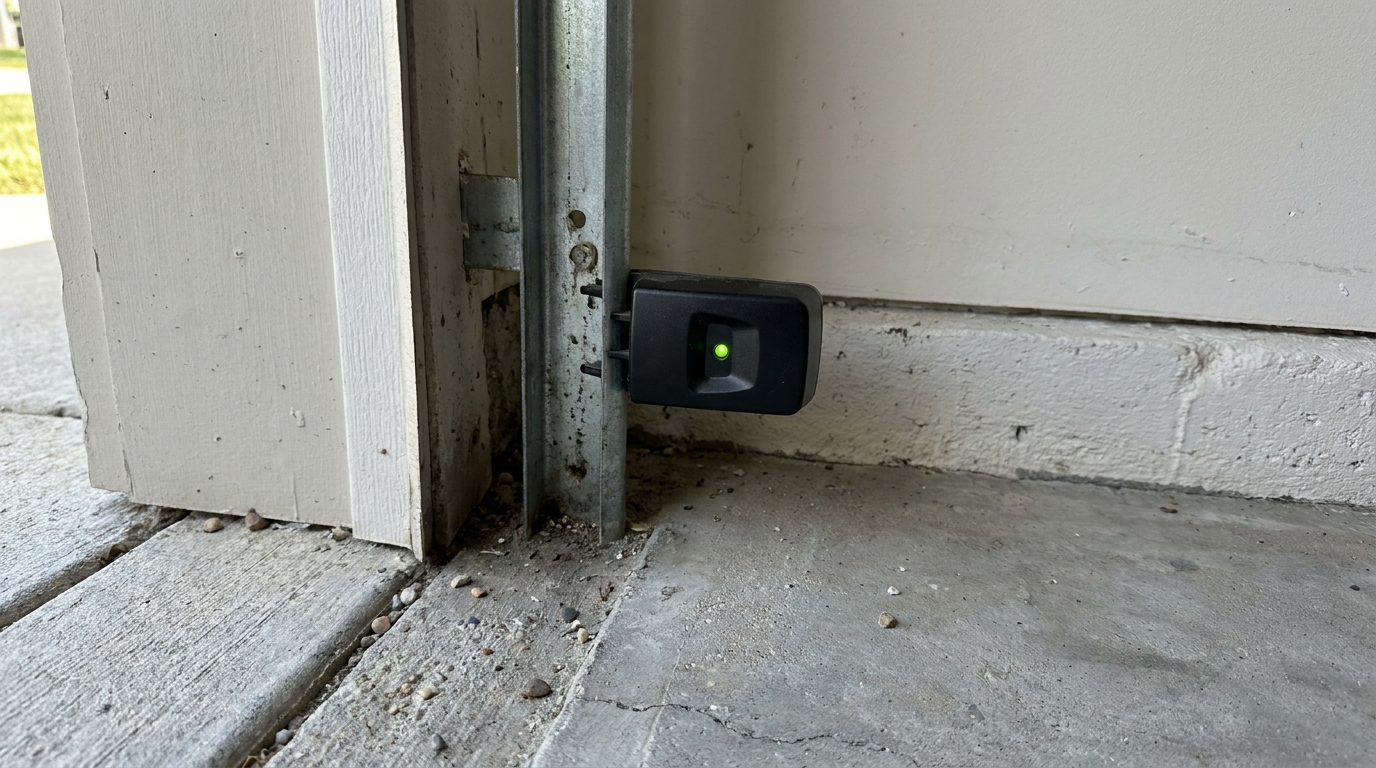
Garage door openers use a pair of safety sensors, sometimes called photo eyes, near the bottom of the door tracks. One sensor sends an invisible infrared beam across the door opening. The other sensor receives it. When the beam is clear and both sensors are communicating, the opener allows the door to close normally.
When the beam is blocked or the sensor system is not working correctly, the opener refuses the close command from wireless controls. That means the remote, keypad, HomeLink system, and myQ-connected devices may still open the door, but they will not close it.
The wall button works differently when you hold it down. It acts as a constant-pressure control, allowing you to close the door while you are standing inside the garage and can see the door path. That can help in a pinch, but it is not a repair.
Chris at Spring King puts it simply: when a customer says the door only closes while they hold the wall button, that tells us right away there is an issue with the safety sensor system.
Why This Is a Safety Issue, Not Just an Annoyance
The sensors are there to make sure there are no people or objects in the path of the door while it closes. Without working sensors, the door may not reverse if a child, pet, bicycle, trash bin, or tool is in the way.
That matters in every home, but especially in homes with young children. A garage door is heavy, and a damaged or unsafe closing system can hurt someone or cause expensive damage to the door.
The wall-button trick may get the door closed for the moment, but it leaves you without normal remote closing and without the safety system working the way it should. If you have to keep holding the wall button every time, treat that as a warning sign. If the door closes and then reverses back open, our guide to why a garage door closes then opens back up explains how sensors, opener limits, tracks, and obstructions can cause that related symptom.
The Most Common Reasons This Happens
Most "garage door won't close unless I hold the button" problems come back to one of five causes.
Dirty Sensor Lenses
The safety sensors sit low to the floor, where dust, spider webs, road grit, pollen, and garage debris collect. A thin film on the lens can be enough to weaken the beam.
Something Blocking the Sensor Beam
The beam travels in a straight line between the two sensors. It can be blocked by something obvious, like a shovel, storage bin, broom, or garden tool. It can also be blocked by something easy to miss, like leaves, cobwebs, or debris hanging from the bottom of the garage door.
Sensors Knocked Out of Alignment
The two sensors need to face each other. If one gets bumped by a bike tire, trash can, snow blower, child, or storage item, the beam may no longer line up. Even a small shift can stop the door from closing normally.
Bad Wiring Connections
The sensors connect back to the opener with low-voltage wiring. Loose connections at the sensor, poor splices, damaged wire, corrosion, or loose terminals at the opener can all create problems. These issues can be especially frustrating because the door may work sometimes and fail at other times.
Failed Sensors
Sometimes the sensor itself has failed. If the lenses are clean, the path is clear, the alignment is right, and the wiring checks out, replacing the faulty sensors may be the correct fix.
Connecticut Seasons Can Make Sensor Problems Worse
In Central Connecticut, sensor issues often follow the seasons.
In the fall, spider webs and loose leaves are common. A small web across the lens or a few leaves blown into the sensor path can stop the door from closing.
In the winter, homeowners often store shovels, snow blowers, and ice melt near the garage door. Those items are easy to bump into the sensors or drag across the sensor brackets. A sensor that worked yesterday can be slightly out of alignment after one hurried snow cleanup.
In the summer, direct sunlight can occasionally wash out the infrared signal. This is less common, but it happens. A door may refuse to close at a certain time of day, then work normally later when the sun moves. That can be confusing for homeowners because the sensors may look aligned and clean.
Those patterns are one reason local experience helps. A garage in Middletown or another Central Connecticut town sees different seasonal stress than a garage in a warmer, drier climate.
Safe Checks Homeowners Can Try First
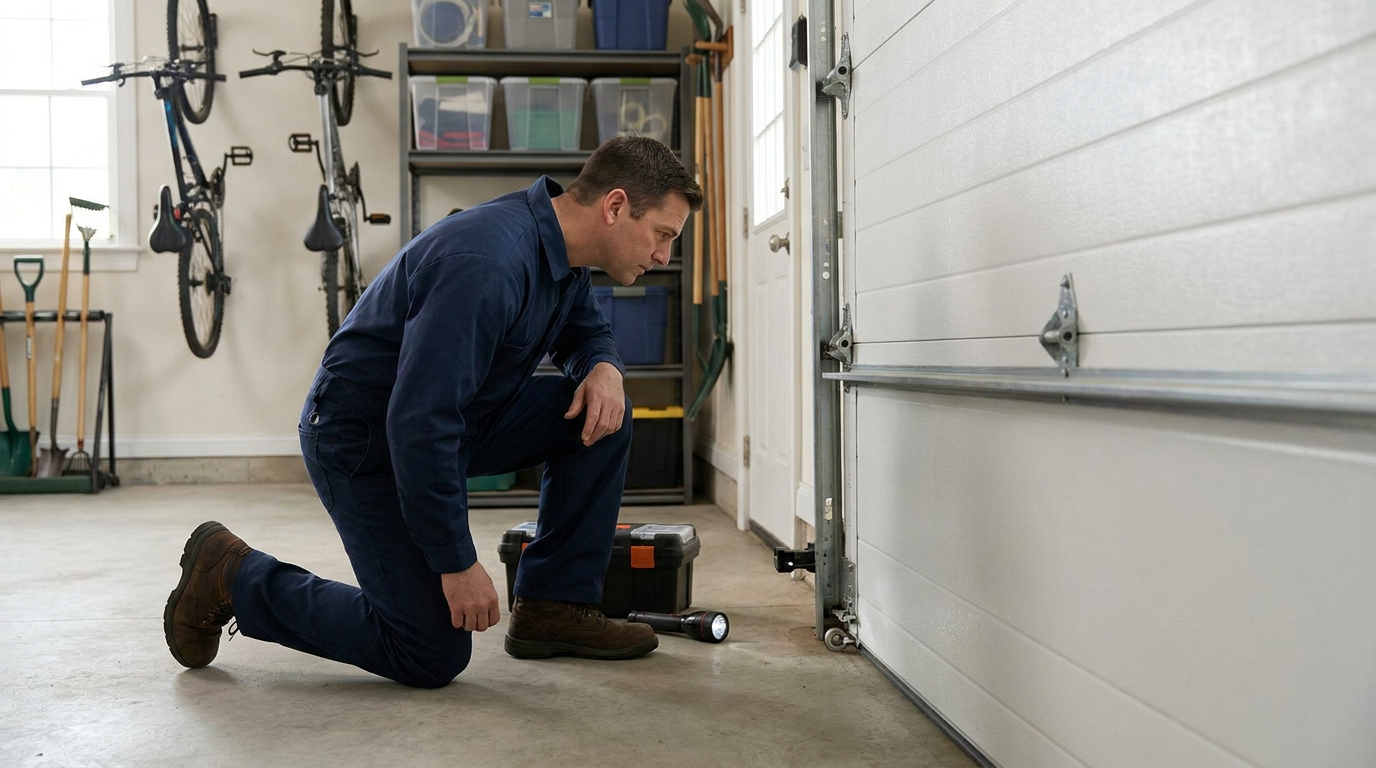
Before calling for service, there are a few safe checks you can do without opening the motor, touching springs, or working with high-tension parts.
Look for Sensor Lights
Check both safety sensors near the bottom of the tracks. Most systems have a small indicator light on each sensor.
If both lights are on and steady, the sensors may be communicating. If one light is off, dim, flickering, or blinking, the sensors may be blocked, dirty, misaligned, disconnected, or faulty.
Light colors and blink patterns vary by opener brand, so do not worry too much about memorizing what each color means. The first question is simple: do both sensors have lights illuminated?
Clean the Lenses
Use a soft damp rag to gently wipe the lens on each sensor. Do not soak the sensor or spray cleaner directly into it. A light cleaning is enough.
This sounds basic, but it solves more problems than many homeowners expect.
Clear the Sensor Path
Look across the opening between the two sensors. Check for:
- Leaves, spider webs, dust, or small debris
- Shovels, snow blowers, brooms, storage bins, or trash cans
- Anything hanging from the bottom of the garage door
- Items that may have shifted near the track
Remember that the beam is low to the ground. Something can block it without looking like it is in the way of the door itself.
Gently Check Alignment
If a sensor looks bumped, twisted, or tilted, you can gently move it so it points directly at the sensor across from it. Many sensors are held in small brackets and can be adjusted slightly by hand.
Do not force the bracket, overtighten hardware, or start moving wires around. If a simple alignment does not bring the light back, stop there.
Test the Door Again
After cleaning and checking for debris, try closing the door with the remote or keypad. If it closes normally, you likely found the issue.
If it still only closes while holding the wall button, it is time to look deeper.
What Spring King Checks on a Service Call
When Spring King arrives for this kind of call, we start with the same basics: make sure the sensors are clean and free of debris. If both indicator lights are not illuminated, we check alignment.
If cleaning and alignment do not solve it, we move into the parts most homeowners should not have to diagnose on their own:
- Wiring from the sensors to the opener
- Breaks, shorts, corrosion, or loose wires
- Connections at the opener terminals
- Connections at the sensors
- Signs that the sensors themselves have failed
If the wiring and connections check out, the sensors have likely failed and should be replaced. Spring King stocks safety sensors and wire on our trucks, so many sensor issues can be handled efficiently during a standard service visit.
Do Not Assume You Need a New Opener
One of the most common mistakes homeowners make is assuming the garage door opener is bad.
That is understandable. If the remote and keypad will not close the door, the opener feels like the obvious culprit. But when the opener still opens the door and the wall button can close it while held down, the sensor system is usually the first place to look.
That distinction can save money. In many cases, repairing or replacing the sensors costs much less than installing a new entry-level opener. Chris notes that Spring King often sees sensor repairs come in at less than one-third the cost of a new entry-level opener.
If the opener hums but the door will not move at all, that points in a different direction, so see our guide to a garage door opener that hums but won't move for that set of causes. The best next step is not to guess. Have the safety sensor system diagnosed so you know whether the issue is alignment, wiring, failed sensors, or something less common inside the opener. If the problem started after an outage or after pulling the red cord, our guide to a garage door opener not working after a power outage explains a different troubleshooting path.
What Not to Do
There is plenty of garage door advice online, and not all of it is safe. Avoid these shortcuts:
- Do not tape, bypass, disconnect, or remove the safety sensors.
- Do not keep relying on the wall button as a permanent fix.
- Do not open the motor housing or work on internal opener components unless you are qualified.
- Do not adjust springs, cables, drums, or other high-tension parts.
- Do not make loose or temporary wiring splices just to get the door working.
Cleaning the lenses, clearing debris, and gently checking alignment are reasonable homeowner steps. Wiring diagnosis, sensor replacement, opener electrical issues, and high-tension garage door components should be handled by a trained technician.
Maintenance Can Help Prevent Repeat Problems
Safety sensors are one of the items checked during a tune-up and maintenance visit. A proper maintenance visit can include cleaning the sensor lenses, checking alignment, testing the reversal system, and looking over the wiring and connections.
That matters if your garage door is used several times a day, or if your garage tends to collect leaves, tools, bikes, shovels, or storage items near the door tracks. A fall tune-up can catch spider webs and debris before winter. A spring visit can identify anything that was bumped or loosened during snow season.
When to Call Spring King
If you have cleaned the sensors, checked for debris, and confirmed the sensors have not obviously been knocked out of alignment, it is probably time to call a professional.
Spring King can diagnose whether the issue is dirty lenses, alignment, damaged wire, loose connections, failed sensors, or a less common opener problem. If the sensors or wiring need replacement, our technicians carry those parts and can typically resolve many of these problems without replacing the entire opener.
For homeowners in Middletown and across Central Connecticut, the goal is simple: get the door closing safely and reliably from your wall button, remote, keypad, HomeLink system, and myQ app again.
If your door only closes while you hold the wall button, schedule garage door opener service or garage door repair with Spring King Garage Doors. We will help you figure out whether it is a quick sensor fix or a deeper issue that needs professional attention.
Need garage door help in Connecticut?
Spring King serves Middletown and 30+ towns across Central CT. Fast response available.
Add Spring King as a Preferred Source on Google