Garage Door Opener Not Working After a Power Outage? What to Check
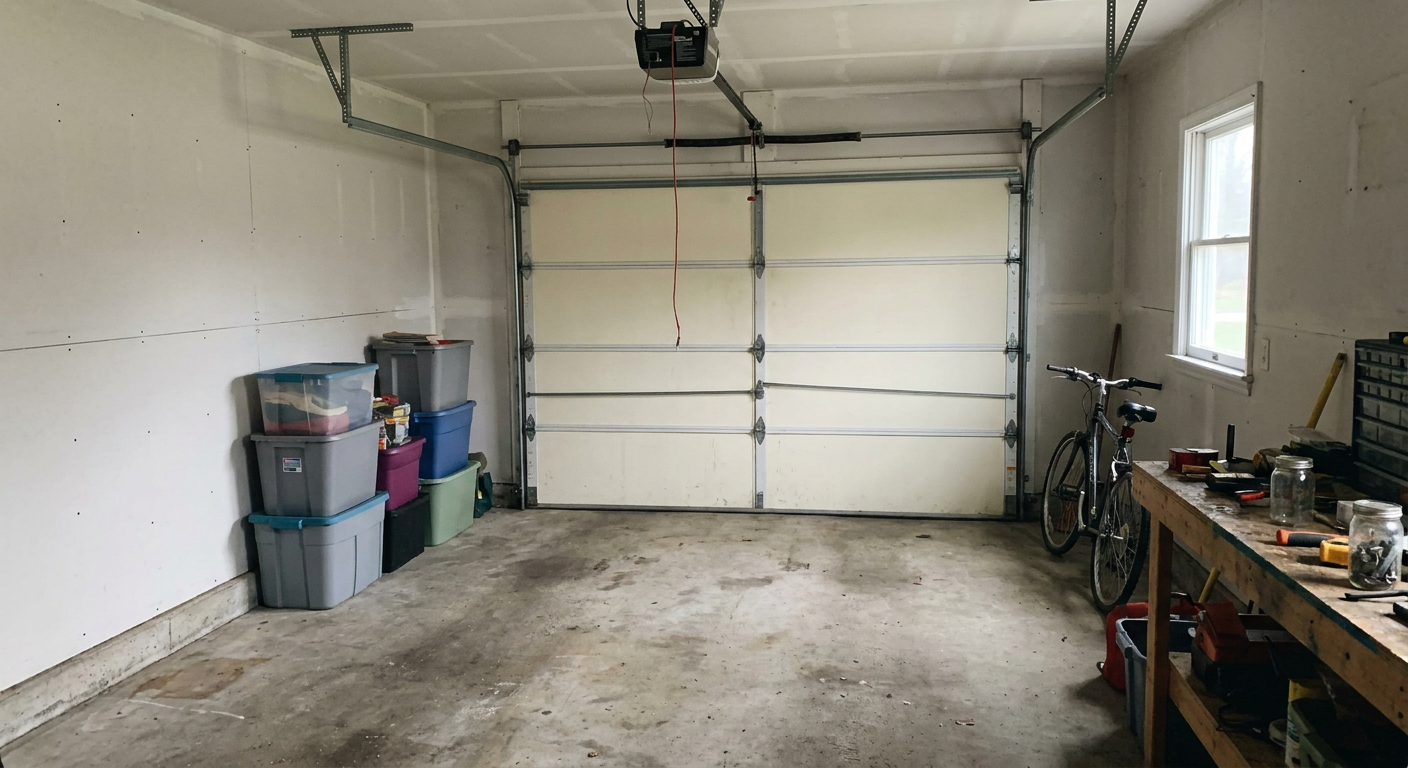
If your garage door opener stopped working after a power outage, storm, or after someone pulled the red emergency release cord, it does not always mean the opener is ruined. In many cases, the issue comes down to one of two things: the opener does not have power, or the opener has power but the trolley is not reconnected to the door.
The tricky part is knowing what you can safely check yourself and when to stop. If the opener starts but the door moves slowly and struggles, an unbalanced, heavy door may be straining the motor. Our guide to a garage door that opens slowly explains that exact scenario and when to call a pro. A garage door opener is only one part of the system. The door, springs, trolley, opener arm, electronics, and safety features all have to work together. For homeowners in Middletown and across Central Connecticut, here is a safe way to think through the problem before scheduling garage door opener service.
Start With the Simple Question: Does the Opener Have Power?
After an outage, start with power before assuming a mechanical failure. The opener may be fine, but the breaker, outlet, or circuit may not be supplying power.
Check the breaker that controls the garage door opener. If it is tripped or shut off, the opener will not respond. If the breaker immediately trips again after being reset, stop there and have the electrical issue diagnosed. Do not keep resetting a breaker that will not hold.
Next, look around the garage. Are the lights working? Is anything else plugged into the same outlet or same circuit? If another device in the same outlet works, that is a helpful clue. If nothing in the garage has power, the opener may not be the problem.
Then look at the opener itself. Many openers have a light, indicator, display, or other sign of life. If the opener light turns on, the unit is likely getting power. If you have a smart opener with myQ or another connected app, being able to access the live camera feed or opener status can also confirm that the opener has power.
That does not necessarily mean the opener is connected to the door. It only tells you the first part of the puzzle: the opener is alive. If the wall button works but the remote, keypad, or vehicle controls do not, the issue may be different; start with our guide to a garage door remote or keypad not working.
If the Opener Has Power But the Door Does Not Move
If the opener light illuminates or the motor makes noise, but the garage door does not move, the trolley may not be properly connected. When the motor runs and hums but the door stays put, our guide to a garage door opener that hums but won't move covers the common causes and what is safe to check.
This is common after someone pulls the red emergency release cord. The red cord disconnects the opener from the door so the door can be moved manually when needed. Afterward, the opener arm has to reattach to the trolley before the opener can move the door again.
The most common mistake is not fully releasing the spring latch that allows the trolley to reconnect. Depending on the opener, the red cord may need to be pulled toward the door or toward the rear of the garage to set the latch in the correct position. Once it is in the right position, the trolley can grab the opener arm again.
Because opener designs vary, do not force anything. If the motor runs but the door sits still, that is a strong sign that the opener has power but is not properly connected to the door.
What the Red Cord Does, and Why It Matters
The emergency release cord is there for specific situations, such as a power outage or a failed opener. It lets the door disconnect from the opener trolley.
That can be helpful, but it also creates risk if the door itself is not balanced. The opener is not supposed to carry the full weight of the door by itself. The springs carry most of that weight. If the spring balance is wrong, the door may feel heavy, drop quickly, or refuse to stay in place.
That is why the red cord should not be treated like a casual reset button. It changes how the door and opener are connected. If the door is not balanced, disconnecting it can make the door dangerous to control.
Never Pull the Red Cord When the Door Is Up
This is the most important safety point in the whole article: do not pull the red emergency release cord while the garage door is up.
If the door balance has not been checked recently, there is a real risk that the door can come crashing down after it is disconnected from the opener. A residential garage door is heavy, and without proper spring tension it can fall with enough force to cause serious injury or property damage.
If the door feels heavy, wants to fall, or will not stay where you place it, stop trying to move it. That is not just an opener problem. It may point to a balance issue, worn springs, or a need for broken spring repair or a professional tune-up and maintenance visit. If the door feels heavy after power is restored, our guide on whether a garage door tune-up is worth it explains why balance problems should be caught early.
For homeowners, the safest path is simple: keep the door down before using the release cord, avoid fighting a heavy door, and call for help if the door does not feel controlled.
When to Stop Troubleshooting and Call a Professional
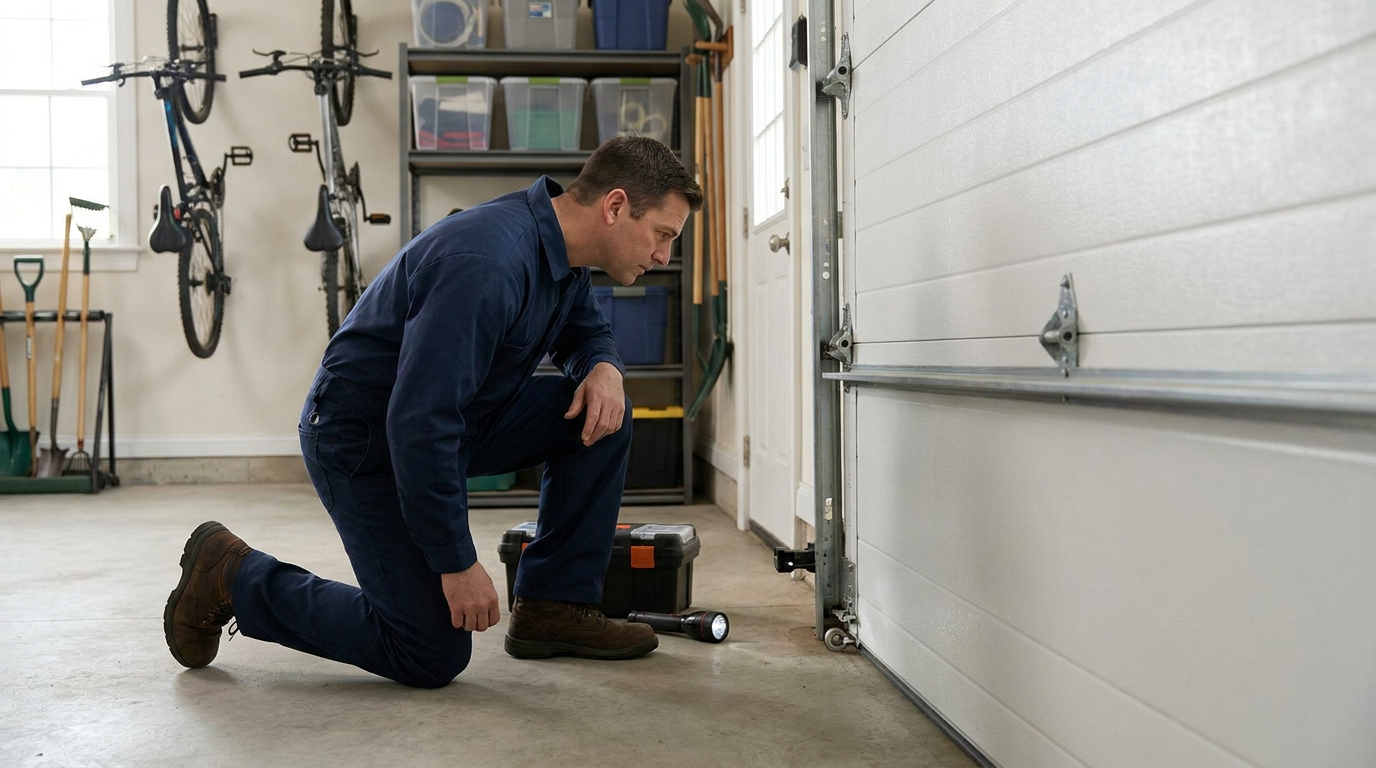
Basic checks are reasonable. You can check whether the breaker is on, whether garage lights work, whether the opener shows signs of power, and whether the trolley appears to be reconnected.
But there are clear points where it is time to stop.
Call a professional if:
- The opener arm appears connected to the trolley, but the opener still will not move the door.
- The opener does not make any noise after basic power checks.
- The breaker trips repeatedly.
- The motor runs but the door does not move.
- The door feels heavy, drops, or will not stay balanced.
- You suspect the opener circuit board, motor, gears, or internal electronics may be damaged.
Opening the motor housing, testing internal electronics, replacing gears, adjusting force settings, or diagnosing spring balance is not a homeowner troubleshooting step. Those issues should be handled by a trained technician.
If your symptom is different, such as a door that opens normally but will not close unless you hold the wall button, that often points to the safety sensor system instead. We cover that separately in our guide on why a garage door won't close unless you hold the button.
What Spring King Checks During an Opener Service Call
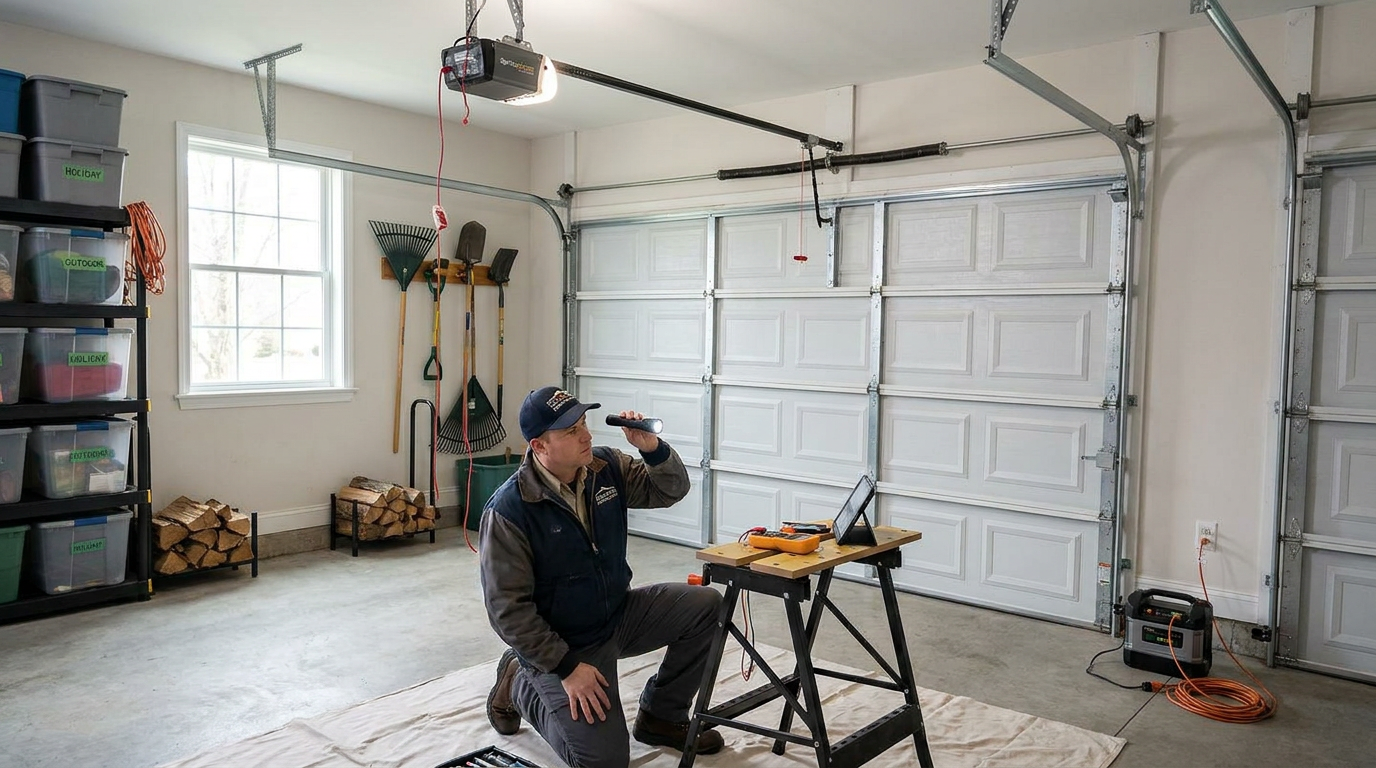
When Spring King comes out for this type of issue, we do not only look at the red cord. We check the opener system as a whole.
That includes confirming the opener has proper power at the outlet, checking whether the circuit board and motor are working correctly, and inspecting the internal gears to make sure they are in good shape. We also verify that the trolley is properly connected and that the opener arm is engaging the door the way it should.
Just as important, we check the door balance. A garage door opener should guide and control the door, not drag a heavy, unbalanced door through every cycle. If the springs are weak, broken, or no longer carrying the right amount of weight, the opener can strain and fail early.
This is why a power outage call can sometimes uncover a broader garage door repair issue. The outage may be what brought the problem to your attention, but the door system still needs to be safe and balanced.
Power Outages, Storms, and Opener Electronics
Connecticut storms can be hard on garage door openers. Power interruptions are one issue, but electrical surges can also damage circuit boards and other opener electronics.
Those electrical issues do not always show up as a completely dead opener. Sometimes the warning sign is stranger, such as a garage door that opens by itself after a storm or power surge. That can point toward opener electronics or logic-board trouble.
A surge protector is a simple way to help protect the opener from surge current during storms. It is not a guarantee against every electrical problem, but it is a smart layer of protection for an opener with electronic controls, lights, Wi-Fi features, cameras, and circuit boards.
If your area loses power often, a battery backup opener may also be worth considering. Battery backup lets the opener continue operating during many outages, which can be especially helpful if the garage is your main entry point or if vehicles are parked inside. We discuss this more in our smart LiftMaster opener guide.
For many homes in Central Connecticut, especially areas that see storm-related outages, battery backup is more than a convenience. It can prevent the whole red-cord situation from becoming a repeated problem.
How to Make the Next Outage Less Stressful
The best time to learn how your emergency release works is not during a storm, in the dark, when you need to leave the house.
If your opener manual is available, review how your specific trolley reconnects. Some systems require the cord to be pulled toward the door. Others may require a pull toward the rear of the garage. The direction matters because it changes the latch position.
A routine service visit can also help. During a tune-up, the door balance can be checked, hardware can be inspected, and opener operation can be tested. If the door feels heavy or does not stay balanced, correcting that issue helps protect the opener and makes the entire system safer.
If your opener is older, unreliable after outages, or missing battery backup, an upgrade may make sense. The right answer depends on the age of the opener, the condition of the door, and how often your home loses power.
Need Help With an Opener After a Power Outage?
If your garage door opener is not working after a power outage or after pulling the red cord, start with the safe basics: confirm power, look for signs the opener is alive, and check whether the trolley has reconnected. Do not pull the red cord while the door is up, do not fight a heavy door, and do not open the motor or work on internal opener parts.
Spring King Garage Doors helps homeowners in Middletown, Middlesex County, Hartford County, New Haven County, and surrounding Central Connecticut towns diagnose opener problems safely.
If the opener has power but the door will not move, or if the opener is silent after basic power checks, contact Spring King. We can inspect the opener, trolley, motor, circuit board, gears, and door balance so you know whether the problem is a simple reconnect, an opener repair, or a larger door-system issue.
Need garage door help in Connecticut?
Spring King serves Middletown and 30+ towns across Central CT. Fast response available.
Add Spring King as a Preferred Source on Google