Rusty Garage Door: Repair or Replace in Central CT?
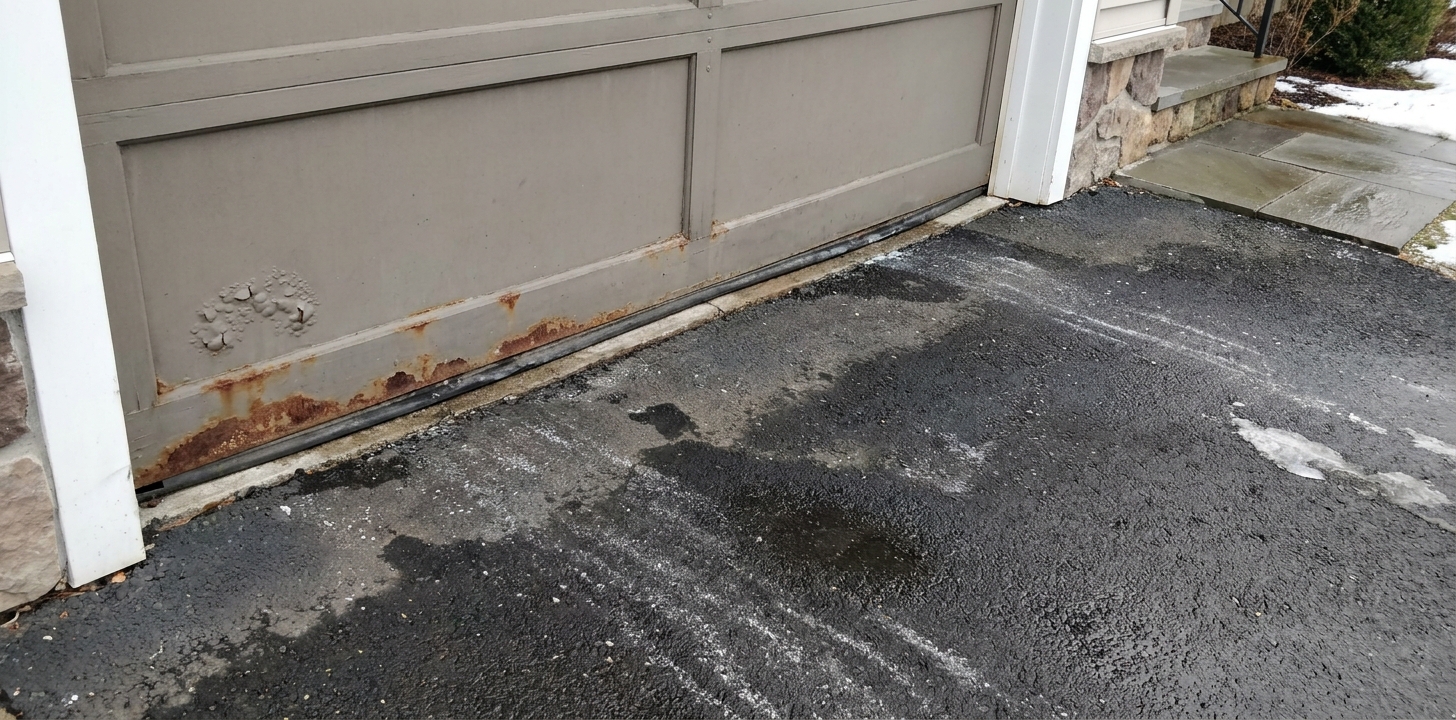
You walk out to the driveway one morning and notice it: a patch of rust creeping along the bottom of your garage door. Maybe it has been there for a while and you have been meaning to look into it. Maybe it appeared after a long Central Connecticut winter and a few months of road salt spray. Either way, the question is the same: is this just a cosmetic problem, or is it something more serious?
The honest answer is that it depends. Garage door rust can range from light surface discoloration that is easy to address all the way to structural damage that makes the door unsafe to operate. Knowing the difference matters, because the right response could save you money, and the wrong response could put you or your family at risk.
Let's walk through everything you need to know so you can make a confident decision about your rusty garage door: repair or replace.
Why garage door rust starts in the first place
Most residential garage doors are made from steel panels coated with paint or a powder-coat finish. That coating is the barrier between the metal and the outside world. As long as it stays intact, the steel underneath is protected. But the moment that barrier is broken, moisture gets to the bare metal and rust begins.
Here in Central Connecticut, there is no shortage of ways that protective layer gets compromised:
- Road salt and snowmelt. If you live along a main road or near a state route in Hartford, Middlesex, or New Haven County, salt-laden slush gets kicked up against garage doors all winter long. Salt accelerates corrosion dramatically.
- Scratches and dings. A bicycle handlebar leaning against the door, a shovel bumping into a panel while clearing the driveway, a basketball bouncing off the surface. Any scratch that cuts through the paint exposes bare steel.
- Moisture sitting at the bottom seal. Water pools naturally where the door meets the ground. If your driveway slopes toward the garage or drainage is poor, that bottom edge stays damp for extended periods.
- Humid Connecticut summers. Warm, humid air promotes condensation on metal surfaces, especially overnight.
- Coastal and shoreline air. If you are closer to the Connecticut shoreline, salt air adds another layer of corrosive exposure that inland homeowners may not deal with as aggressively.
The key takeaway here is that most garage door rust starts from small, easy-to-miss damage. A tiny scratch or chip that you never noticed becomes the entry point. Once rust gets a foothold, it spreads beneath the surrounding paint and accelerates, eating away at the steel from the inside out.
That is why early detection and early action matter so much.
How to tell surface rust from structural damage
Not all rust is created equal. Before you panic, it helps to understand the spectrum.
Surface rust and cosmetic discoloration
If you see a small orange or brown patch on the surface of a panel, and there is no flaking, bubbling, soft-looking metal, or hole forming, you may be looking at surface rust. The paint or coating has been breached, moisture has reached the steel, but the panel may still be structurally sound.
That does not mean you should ignore it. Surface rust will continue to spread if left untreated. But it usually gives you time to act before it becomes a bigger problem.
Rust that has gone deeper
If you see any of the following, the rust has moved beyond cosmetic:
- Flaking or pitting. Pieces of metal are visibly lifting away or crumbling. The surface is no longer smooth.
- Soft or thin-looking metal. The rusted section may look weak, wavy, or eaten away compared to the surrounding panel.
- Holes or perforations. Rust has eaten entirely through the steel in one or more spots.
- Bubbling paint. Paint is bubbling or peeling away from the surface in areas around the rust, which usually means corrosion is spreading underneath the coating where you cannot see it.
When metal is flaking off or the panel feels soft to the touch, the structure of that panel is failing. Sanding it down and repainting will not restore the strength of the steel. The damage is done.
This distinction between surface rust and structural rust is the single most important factor in deciding whether your garage door can be repaired or needs to be replaced.
Why rust near the bottom brackets is a safety concern
There is one area of a garage door where rust is not just a repair question. It is a safety question.
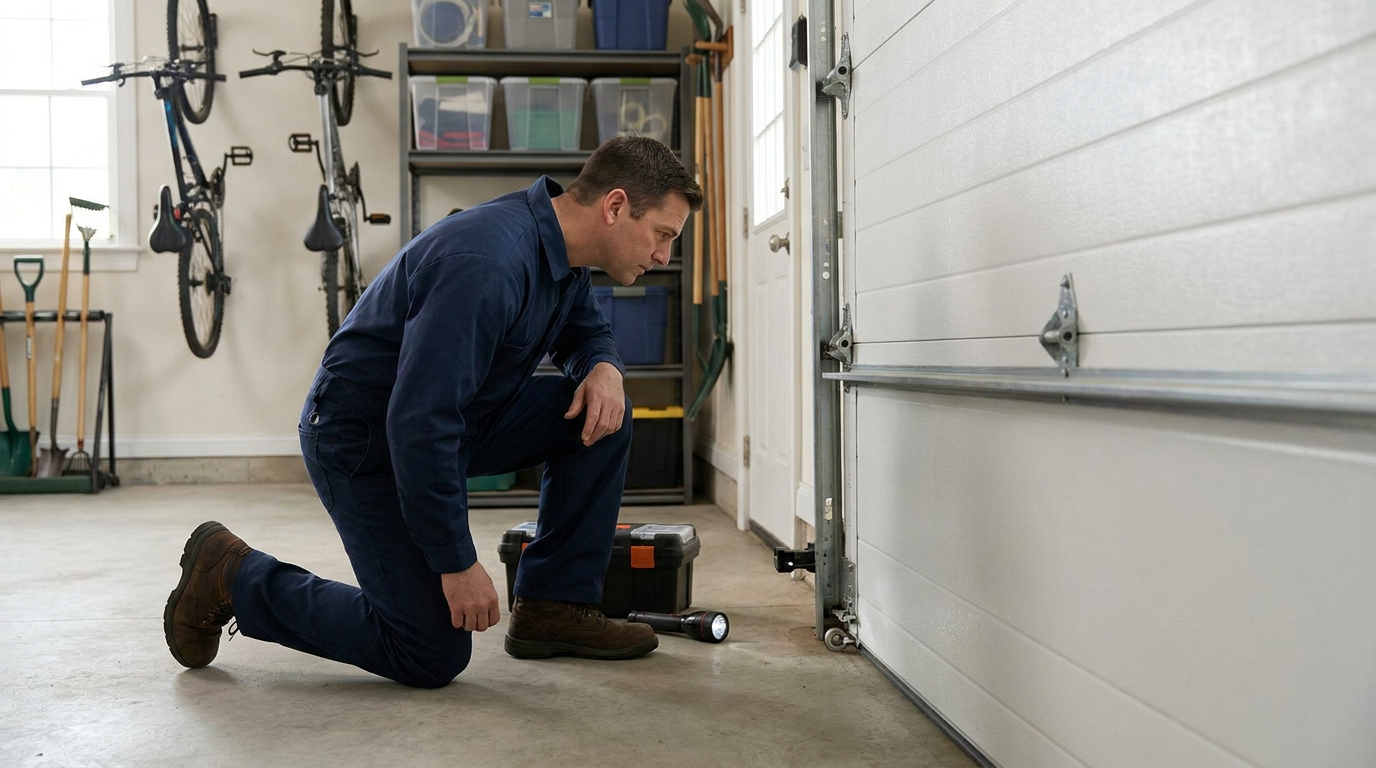
The bottom brackets are the hardware at the lower corners of your garage door where the lift cables attach. Those cables are part of the counterbalance system and carry heavy tension every time the door opens and closes.
If rust weakens the steel around a bottom bracket, the bracket could break away from the panel under that tension. When that happens, the force behind it can be sudden and dangerous.
If you see rust forming near the bottom corners of your garage door, especially around or behind the bottom brackets, do not touch the hardware or try to test it by hand. Do not tighten, adjust, or remove anything in that area. This is a professional repair situation, and it involves taking tension off the springs before any work can be done safely.
If you notice rust in this area, the best thing you can do is call a professional for a proper diagnosis. Our team handles garage door repair throughout Central Connecticut, and assessing bottom bracket conditions is a routine part of what we do. If cable or bracket work is needed, our cable repair service is specifically designed for these high-tension components.
What you can safely inspect and what to leave alone
A homeowner can stay aware of rust without getting into the dangerous parts of the system. Walk around the outside of the door and look at each panel, especially the bottom edge where moisture exposure is usually worst. Note whether the rust is one small spot, a stripe along the bottom, or spread across multiple panels. That information is helpful when you call for a professional evaluation.
If you spot a fresh scratch or chip that has exposed bare steel but rust has not started yet, touch-up paint or a rust-inhibiting primer can help prevent corrosion from taking hold. Light surface rust away from high-tension hardware can sometimes be treated early with the right product and a fresh coat of paint.
Leave to professionals
Anything involving springs, cables, bottom brackets, or hinges should be left alone. These components are under high tension, and adjusting or removing them without proper tools and training is dangerous. Panel removal is also professional work because the door system has to be secured and spring tension has to be managed first.
If you are unsure whether rust is cosmetic or structural, a professional assessment is the right call.
Repair options: from surface rust to full replacement
Once you have a sense of how extensive the rust is, the next question is what to do about it. Here is how the repair-or-replace decision typically plays out.
Scenario 1: early surface rust on an otherwise sound door
If the rust is limited to light surface discoloration and the metal is still solid, you may be able to treat the area yourself. Gently remove loose rust, apply a rust converter or inhibiting primer, and repaint to reseal the surface. This approach works best when you catch it early, before corrosion has had time to dig in.
Keep in mind that this is only effective for genuine surface rust. If the metal is pitting, flaking, or soft, a cosmetic fix will not hold.
Scenario 2: one rusted panel with structural damage
If one panel has rust that has compromised the steel but the rest of the door is in good shape, panel replacement may be a practical and cost-effective option. A single damaged panel can be swapped out without replacing the entire door system.
However, there is an important caveat: the replacement panel has to be available. Garage door manufacturers periodically discontinue panel designs, colors, and styles. If your door is older or the manufacturer has changed their product line, the exact panel you need may no longer be in production. When that happens, a single-panel repair may simply not be possible.
A professional can help you determine whether your panel is still available and whether replacement makes sense given the age and condition of the rest of the door.
Scenario 3: replacement panels are unavailable
If the panel you need has been discontinued, your options narrow. In some cases, it may be possible to source a close match, but differences in color, texture, or profile can be visible. For many homeowners, this is the point where replacing the entire door becomes the more practical choice, especially if the door is already aging.
Scenario 4: multiple panels are rusted, or the door shows broader wear
If rust has spread to two or more panels, or if the door is showing other signs of age and neglect like faded finish, worn weatherstripping, noisy operation, or sluggish movement, replacing the full door system is almost always the smarter investment.
Replacing multiple individual panels can approach or even exceed the cost of a new door, and you are still left with the older springs, hardware, tracks, and opener. A new garage door installation gives you a fresh system from top to bottom: new panels, new hardware, new weathersealing, and the option to choose a better-insulated door if that matters for your home.
For a deeper look at how to weigh single-panel replacement against a full new door, take a look at our guide on garage door panel replacement vs. a new door.
A note about manufacturer warranties and rust
This is something many homeowners do not realize: a number of garage door manufacturers include warranty coverage for rust and panel delamination. These warranties can sometimes cover the cost of replacement panels if rust develops prematurely.
There are a few things worth knowing:
- Warranty coverage typically applies to the original purchaser of the door. If you bought your home with the garage door already installed, the warranty may not transfer to you, though it is worth checking.
- Warranties generally cover the panels themselves but not the labor required to install them.
- Coverage terms, duration, and conditions vary by manufacturer and product line.
We are not making any guarantees about warranty coverage here, because every situation is different. But if you have a relatively newer door showing premature rust, it is worth looking into. If you still have your original purchase paperwork or warranty documentation, that is the best place to start. A professional evaluation can also help you determine whether a warranty claim is worth pursuing.
Preventing garage door rust before it starts
The best rust repair is the one you never need. Here are practical steps you can take to protect your garage door, especially through Central Connecticut's tough seasonal cycle.
Keep water from sitting against the door
Make sure your driveway drains away from the garage. Clear leaves, debris, and snow buildup from the base of the door. If the bottom weatherseal is worn or damaged, water can creep underneath and sit against the lower panel edge for extended periods.
Rinse off road salt
After winter storms, especially if you live near a well-salted road, give the lower portion of your garage door a quick rinse with a hose once temperatures are above freezing. Salt left on the surface accelerates corrosion significantly.
Touch up scratches and chips promptly
Keep a small container of matching exterior paint or a rust-inhibiting primer on hand. When you notice a scratch or chip that has exposed bare metal, touch it up before moisture has a chance to start the rusting process.
Treat surface rust early
If you spot a small patch of surface rust, address it while it is still minor. Remove the loose rust, apply a treatment product, and repaint. The longer you wait, the deeper it goes and the harder it is to stop.
Schedule routine maintenance
A professional tune-up and maintenance visit is one of the most effective ways to catch rust and other issues early. During a tune-up, a technician inspects the panels, hardware, weathersealing, and overall condition of the door system. Small problems get identified before they grow into expensive ones. If you are curious about what a tune-up includes and whether it is worth it, we covered that topic in detail in our post on whether a garage door tune-up is worth it in Central CT.
The bottom line: do not let rust eat away at your garage door
Rust can eat away at a garage door if you give it time. What starts as a small cosmetic blemish can progress into weakened steel, failed panels, and in the worst cases, a safety hazard around high-tension hardware like bottom brackets and cables.
The key is not to wait and hope it stops on its own. It will not.
If you have rust on your garage door and you are not sure whether you are looking at a cosmetic issue or a structural one, we are happy to take a look. Our team serves homeowners throughout Hartford, Middlesex, and New Haven counties, and we will give you an honest assessment of what your door needs.
For a broader look at how to decide between repairing and replacing a garage door in general, our garage door repair vs. replacement guide is a helpful companion to this article.
Ready to get your garage door checked out? Contact Spring King Garage Doors and we will help you figure out the best path forward for your home.
Need garage door help in Connecticut?
Spring King serves Middletown and 30+ towns across Central CT. Fast response available.
Add Spring King as a Preferred Source on Google