Garage Door Won't Close? Safe Checks and When to Call a Pro
You press the button, the opener starts, and the garage door refuses to close. Maybe it drops a few inches and reverses. Maybe the opener lights flash. Maybe the door moves crooked, binds in the track, or stops before it reaches the floor.
For homeowners in Central Connecticut, this is one of those problems that can be simple or serious. A dirty safety sensor is an easy fix. A jammed or off-track door is a different situation entirely.
This guide walks through the safe checks you can make first, the warning signs that mean you should stop, and what details are helpful when you call Spring King Garage Doors for diagnosis.
Start With the Safety Sensors
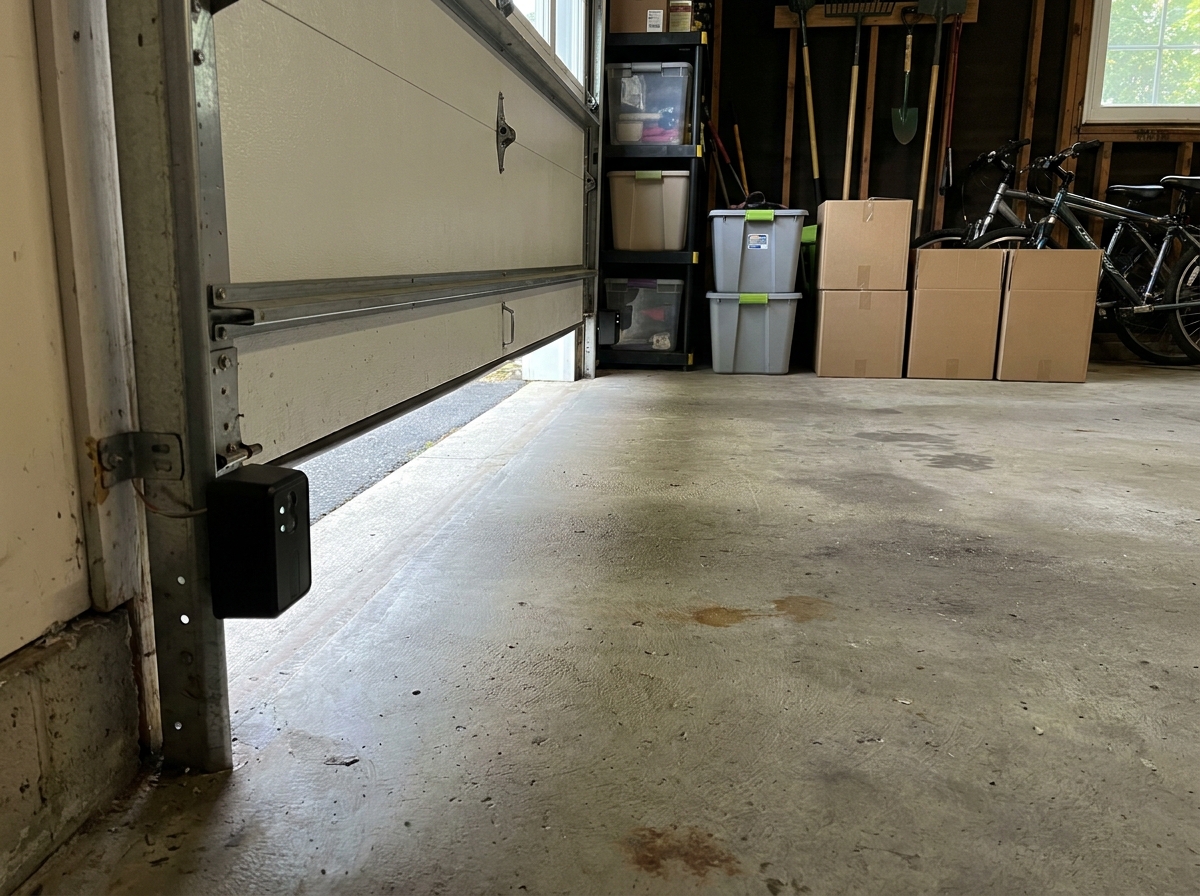
If your garage door will not close, the first place to look is the safety sensor system. These photo-eye sensors sit near the bottom of the door tracks, one on each side. They send an invisible beam across the opening. If that beam is blocked or the sensors cannot see each other, the opener will not allow the door to close.
That is usually a good thing. The sensors are there to keep the door from closing on a person, pet, vehicle, bike, trash can, or anything else in the opening.
But they are also easy to bump out of position. In a busy garage, a shovel, broom, leaf blower, stroller, storage bin, or trash barrel can tap the sensor bracket just enough to break alignment. Leaves, spiderwebs, dust, and grime can also interfere with the lenses.
Safe Checks Homeowners Can Try
Before assuming the opener has failed, try the simple items first.
Check the Sensor Lights
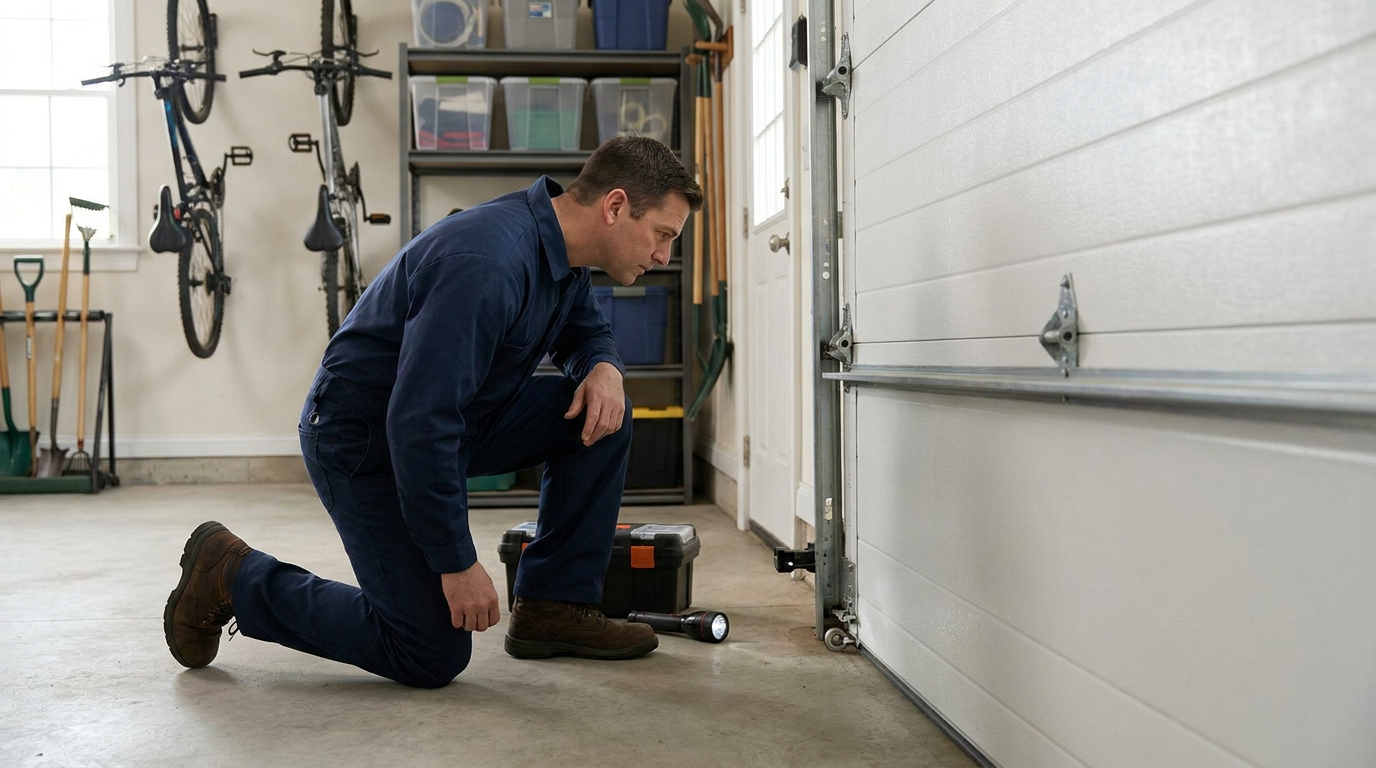
Look at both safety sensors near the floor. Most openers have small indicator lights on the sensors. Depending on the brand, the lights may be green, amber, red, or another color.
You do not need to know every code to learn something useful. If one light is off, blinking, or flickering while the other is steady, that often points to a sensor issue. If both lights are steady, the sensors may be working, although intermittent sensor problems can still happen.
Clean the Sensor Lenses
Wipe both sensor lenses with a soft cloth. Do not use anything abrasive. The goal is simply to remove dust, spiderwebs, pollen, or garage grime from the little eye on each sensor.
This is one of the safest and easiest checks a homeowner can make. It takes less than a minute and can solve the problem when the beam is being blocked by something small.
Check the Sensor Alignment
Both sensors need to face each other directly. If one sensor is angled up, down, or slightly away from the opposite side, the opener may think something is blocking the door.
If the sensor bracket is loose or visibly bumped, gently straighten the sensor so it points across the opening. Watch the indicator lights while you do this. A steady light usually means the connection is restored.
Do not overthink this step. If a careful adjustment does not bring the lights back or the problem keeps returning, the issue may be wiring, vibration, loose mounting, or another opener problem.
Clear the Door Path
Look across the full path of the door. Move toys, tools, storage bins, ladders, bikes, trash cans, snow shovels, leaves, and anything else that might interrupt the beam or sit under the door.
Then look inside the tracks for obvious debris. A small object in the wrong spot can create enough resistance for the opener to stop or reverse.
These are reasonable homeowner checks. They do not involve springs, cables, track adjustments, opener force settings, or internal opener parts.
When Sensors Are the Problem but It Is Not Obvious
Sensor problems are not always dramatic. Sometimes the lights look fine until the door begins moving.
On one service call, a homeowner had already had a new opener installed, but the door still had an intermittent closing problem. The sensors appeared normal at first glance. The issue was that one sensor was slightly out of alignment and the connection broke for a split second as the door moved. It happened too quickly for the sensor lights to visibly go out in a way the homeowner could catch.
Spring King readjusted the sensors, tightened the mounts, and the door ran correctly in under 10 minutes.
That is why a door can be frustrating even when the obvious checks look fine. A small alignment issue, loose bracket, weak connection, or vibration can create a problem that only shows up during movement.
Why the Door May Reverse Before Closing
If the door starts down and then reverses, the opener is usually responding to one of two things: it thinks something is in the way, or it senses too much resistance.
Common causes include:
- Dirty or misaligned safety sensors
- Leaves, tools, storage items, or other obstructions in the door path
- Debris in the track
- A bent panel creating resistance
- Misaligned tracks
- Incorrect opener down-limit or force behavior
- Worn internal opener components
- A belt or chain that is worn, loose, or skipping
Some of these are simple. Some are not. The important part is knowing where to stop.
If your door closes and then opens back up, the symptoms may overlap with our separate guide to a garage door that closes then opens back up. If the door only closes while you hold the wall button, see our guide on why a garage door will not close unless you hold the button.
Do Not Force the Door Down
Forcing the door down is one of the biggest mistakes a homeowner can make.
If the opener is refusing to close the door, there is a reason. Pushing harder, leaning on the door, repeatedly pressing the remote, or trying to muscle it shut can damage the door, opener, panels, track, belt, chain, trolley, or hardware.
It can also make a dangerous situation worse. A garage door is heavy, and when it is crooked, jammed, binding, or off track, the weight may no longer be supported the way it should be.
If the door does not close after the safe sensor and obstruction checks, stop there. The next step is a professional diagnosis, not more force.
When to Stop Troubleshooting Immediately
Some garage door problems are not homeowner projects. Call for professional garage door repair if you notice any of these signs:
- The door is jammed in the track
- The door has come off track
- One side of the door is higher than the other
- The door looks crooked or twisted
- A panel is bent and catching as the door moves
- The opener strains, grinds, clicks, or hums without normal movement
- The belt or chain is hanging lower than normal
- The door starts down and reverses even after the sensors are clean and aligned
- The problem is intermittent and hard to reproduce
A jammed door or an off-track door can be very dangerous. Do not try to pry it loose, adjust the track, remove rollers, loosen brackets, or force the door closed. Those repairs can involve heavy door sections, spring tension, cables, and hardware under load.
Opener Problems That Can Look Like Sensor Issues
Not every closing problem is caused by the sensors.
The opener has to know where the door is, how far it should travel, and how much resistance is normal. If an internal limit sensor is worn, the opener may lose track of the door's position. Sometimes an up/down adjustment seems to help for a little while, but the problem comes back because the hidden component inside the motor housing is wearing out.
A worn belt or chain can create a similar mismatch. If the belt or chain skips on the gear, the motor may think the door is moving correctly even when the door and opener are no longer synchronized.
You may notice:
- The opener motor runs but the door does not move normally
- The chain or belt hangs below the rail
- The door movement looks delayed, jerky, or uneven
- The opener sounds different than usual
- The issue improves temporarily, then returns
These are good reasons to schedule garage door opener service. Opener diagnosis can involve the motor, rail, trolley, belt, chain, travel limits, force behavior, sensors, and wiring. Guessing at those settings can make the problem worse.
What to Tell Spring King When You Call
You do not need to diagnose the door yourself before calling. Spring King can figure out the issue on site.
That said, a few details can help us understand the situation before we arrive:
- Are the safety sensor lights on, off, blinking, or flickering?
- Does the door move at all, or does it refuse to start down?
- Does it reverse right away or near the floor?
- Does the opener make a humming, clicking, grinding, or straining sound?
- Is the door crooked, jammed, or visibly off track?
- Did the problem start after something bumped the sensor, hit the door, or shifted in the garage?
- Have you already cleaned the lenses or moved anything out of the way?
Those details are helpful, but they are not required. If all you know is "my garage door won't close," that is enough to start.
A Simple Homeowner Checklist
If your garage door will not close, use this quick order:
- Look for anything blocking the door path.
- Check the safety sensor lights.
- Clean the sensor lenses.
- Gently realign a bumped sensor if it is clearly out of position.
- Look for obvious debris in the track.
- Stop if the door is jammed, crooked, off track, damaged, or still refusing to close.
That last step matters. A few safe checks are worth trying. Fighting the door is not.
Get the Door Diagnosed Safely
A garage door that will not close can leave your home exposed and your day stuck in place. Sometimes the fix is as simple as a sensor adjustment. Other times, the door is protecting you from a track, opener, panel, or mechanical problem that needs trained hands.
Spring King Garage Doors helps homeowners across Central Connecticut, including Hartford, Middlesex, and New Haven counties, diagnose closing problems safely. If your sensors are clean, the path is clear, and the door still will not close, contact Spring King. We will inspect the full system and get the problem handled without forcing the door or putting the opener through unnecessary strain.
Need garage door help in Connecticut?
Spring King serves Middletown and 30+ towns across Central CT. Fast response available.
Add Spring King as a Preferred Source on Google